${ product.name }
${ product.typeTitle }
Item no ${ product.sku }
- ${ setting }
- ${ product.variantName}
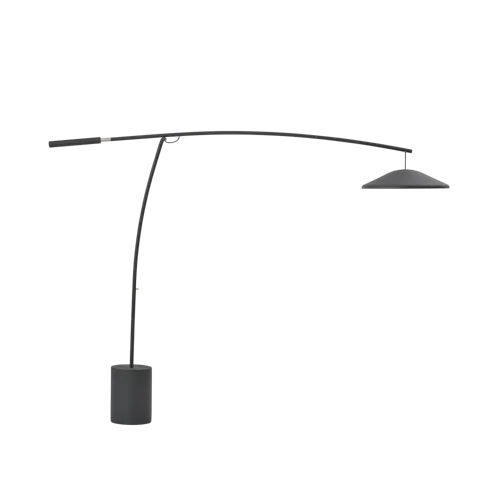
Designer Jamie Wolfond has long been interested in the mechanics of lighting and in making the way an object works part of its expression. With Contra, that curiosity evolved into a broader exploration of movement, balance, and scale.
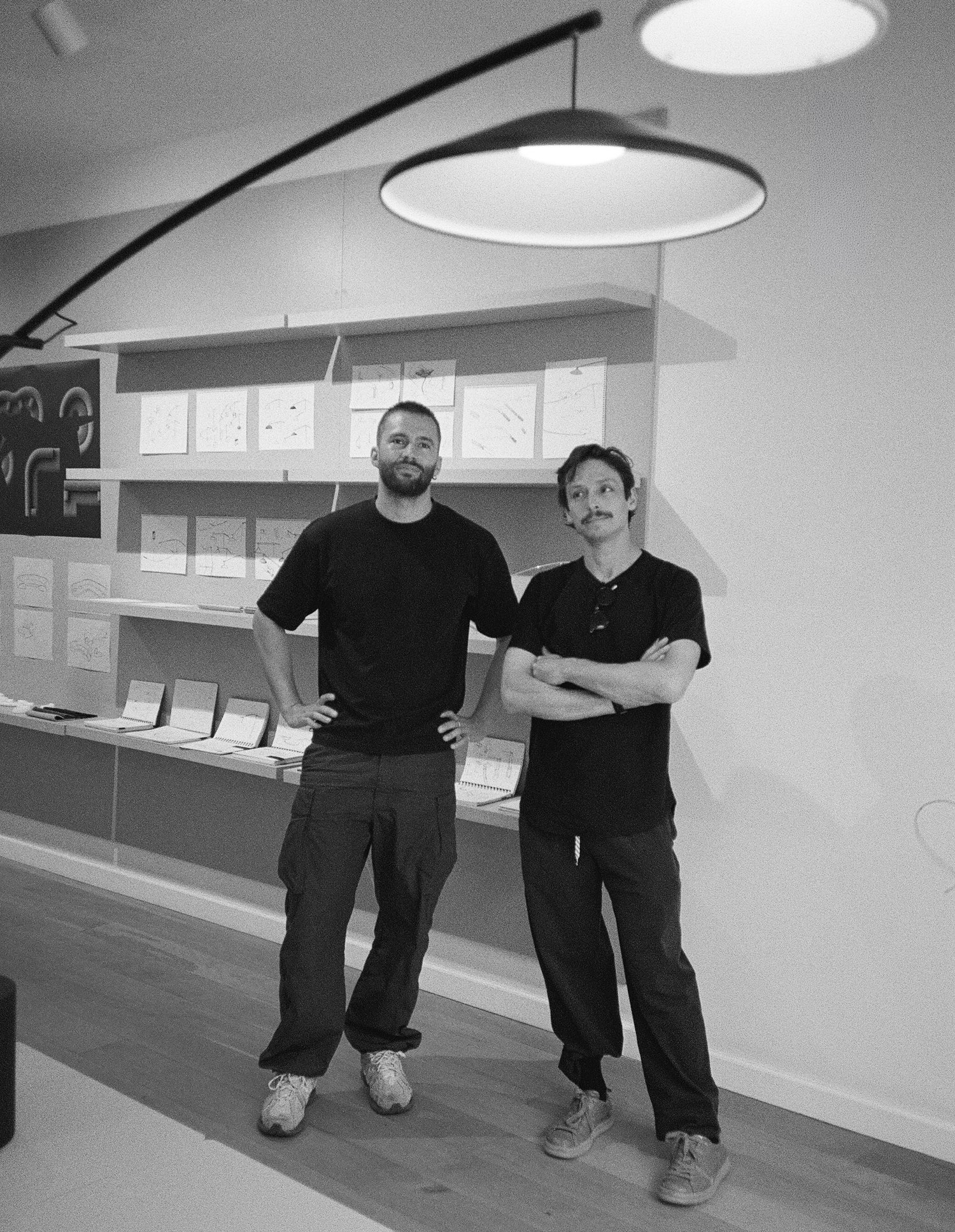
We sat down with Wolfond and Jon, Design Manager at Muuto, to talk about the process behind Contra and the dialogue that shaped it. Over the course of the project, the two worked closely through a long series of iterations, testing how far the mechanics could be pushed.
“What was interesting about it in the end was actually different from what I expected,” Wolfond says. “Defining an interesting way to adjust a lamp was really just the first part of it. What was cool about this process was the scale.”
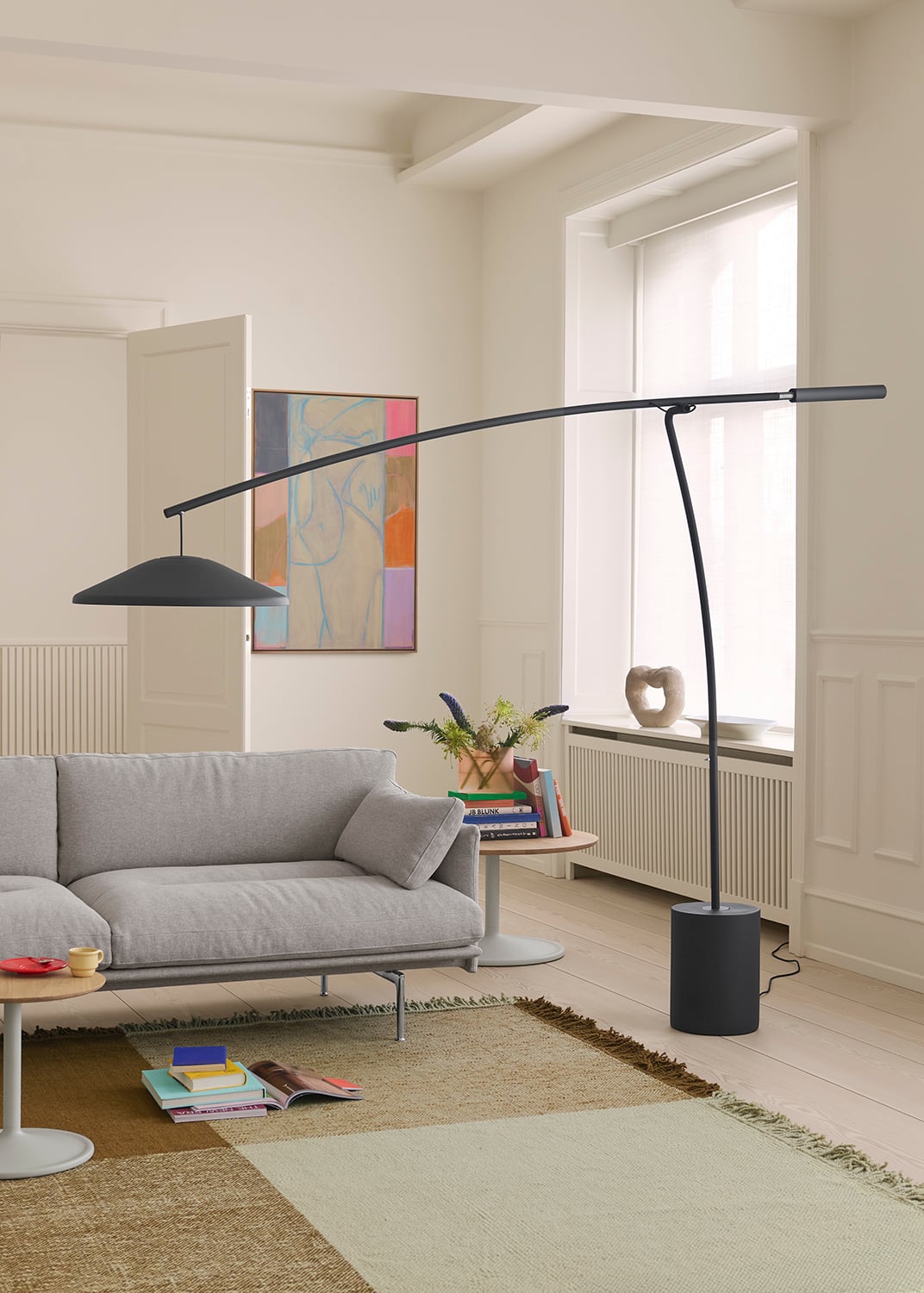
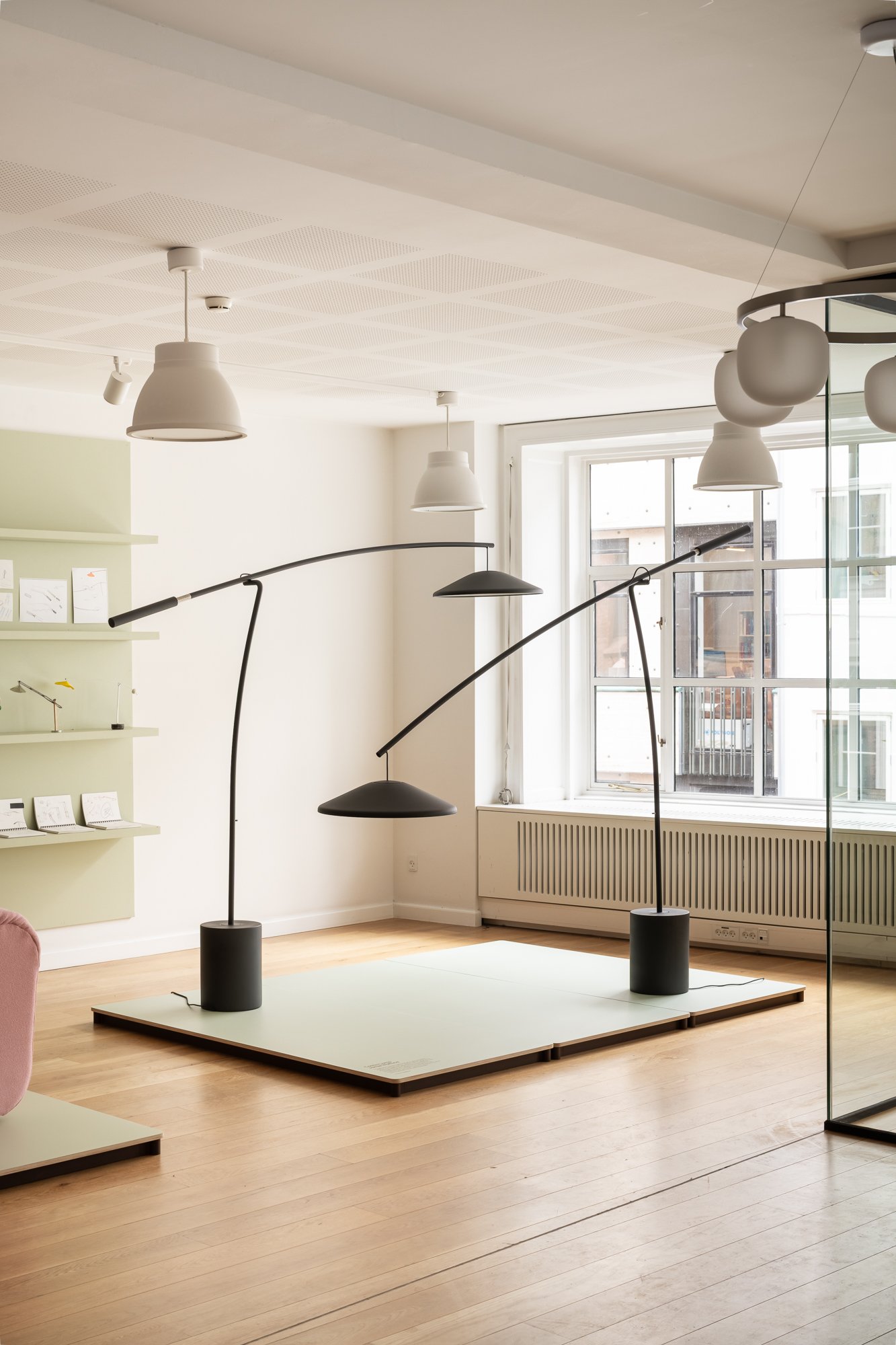
Contra is large enough to take on an almost architectural presence. For Wolfond, that meant it could no longer rely on one defining gesture. “When something becomes that big, you can no longer think about it like a self-contained object where there is one central feature and everything points to that feature,” he explains. “You actually have to find a way for multiple interesting things to happen.” That sense of scale was also what caught Jon’s attention.
“To include such an advanced and playful adjustability in such a big lamp typology is actually quite daring, “ he says. “Many lamps within this typology are quite static.”
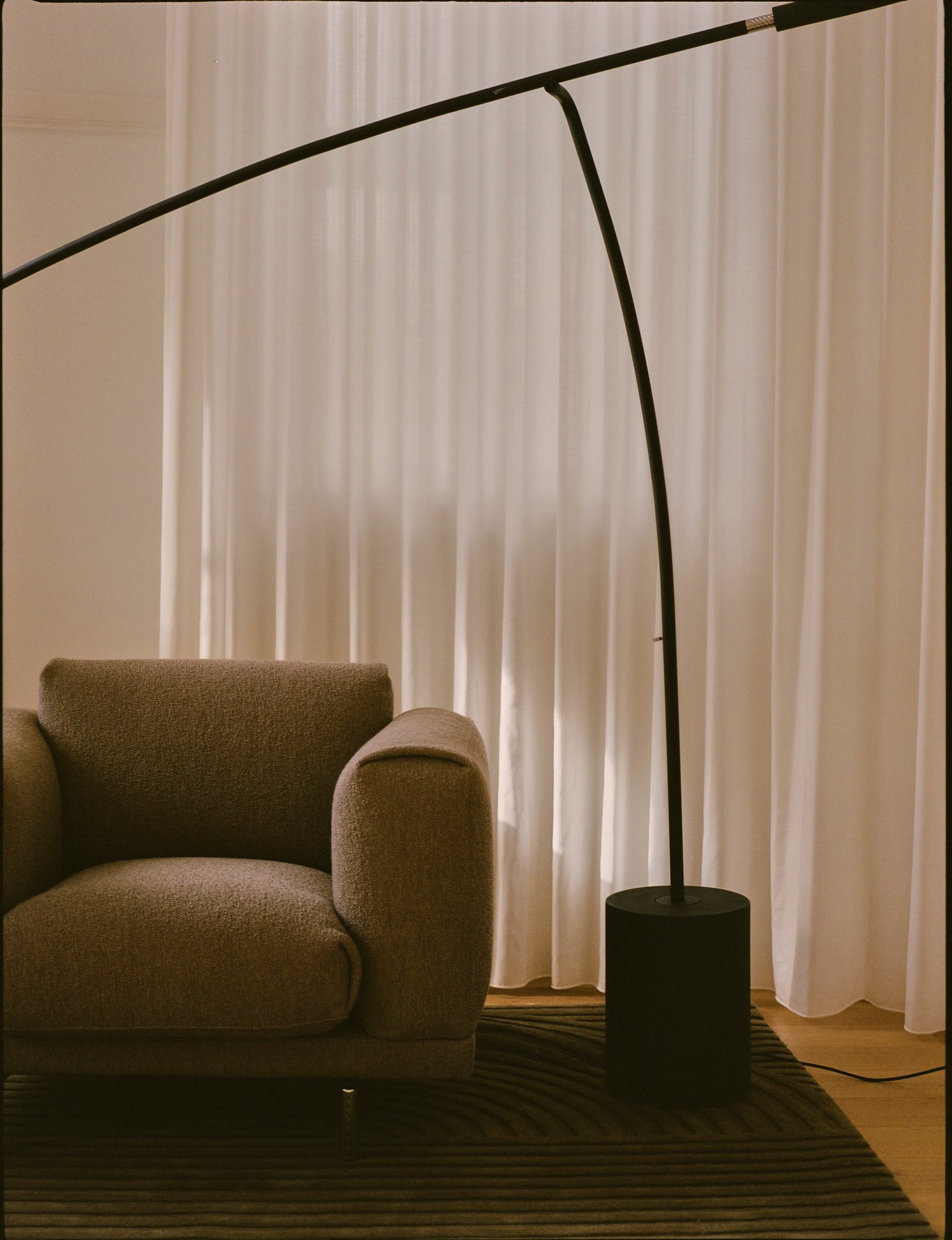
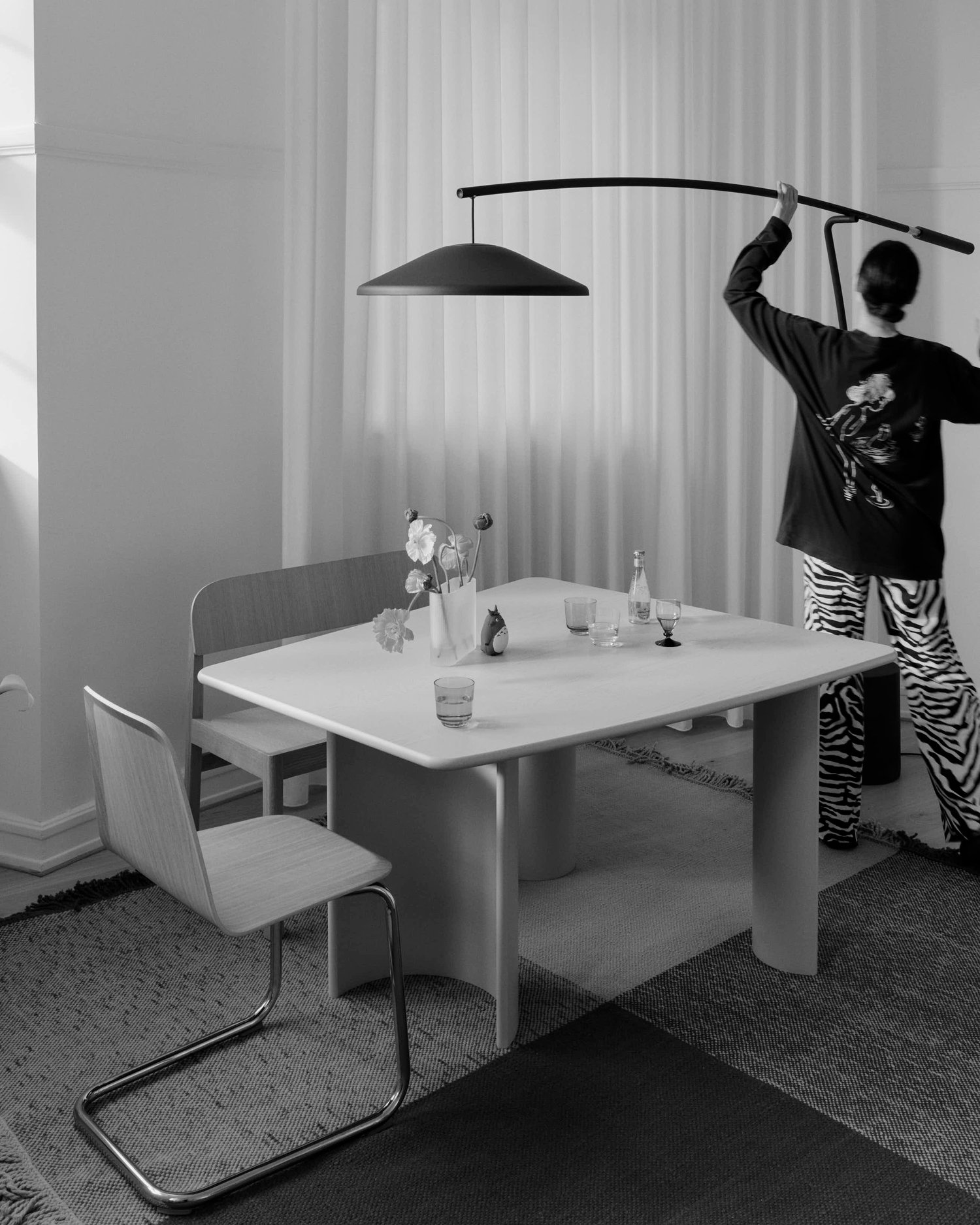
At the center of Contra is the idea of equilibrium. While studying traditional counterweight lamps, Wolfond became interested in the way many use friction to hold their position, creating the appearance of balance rather than maintaining true equilibrium. He wanted to see what would happen if the mechanism worked differently. “I was just really curious about what would happen if you tried to do it in a really sincere way.”
The solution is a multi-start thread that allows the counterweight to move along the arm. As its position changes, so does the center of mass, allowing the lamp to naturally settle into a new angle. A small turn produces a much larger movement.
Rather than concealing that mechanism, Contra makes it visible. The stainless steel thread stands out against the darker structure, offering a subtle indication of where and how to interact with the lamp. For Jon, that clarity is essential to an adjustable object, its form should invite the user in. Wolfond puts it another way.
“The only substitute for making something really obvious is making it really intriguing,” he says. “You may or may not approach it knowing what it’s going to do, but you approach it knowing where you’re supposed to do it.” In that sense, interacting with Contra becomes part of understanding it. Turning the counterweight reveals the forces within the lamp rather than hiding them.
“You are also, as the person using it, experimenting with physics,” Wolfond says.
The lamp’s curves emerged through a similar process. Wolfond had not originally intended Contra to have a soft expression, but the engineering gradually led it there. The horizontal arm curves to control the sensitivity of the counterweight, while the mast bends to reposition the pivot without moving the base.
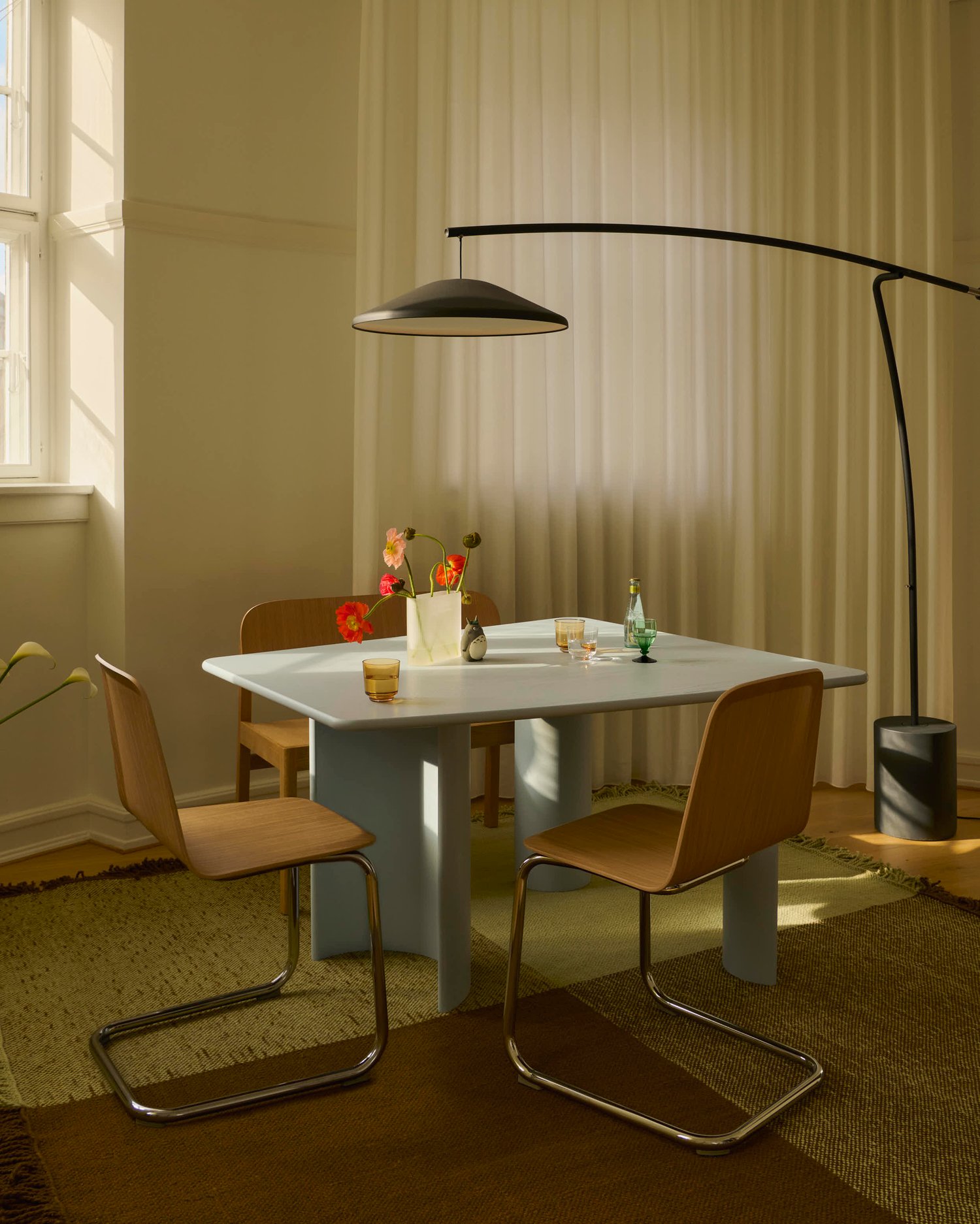
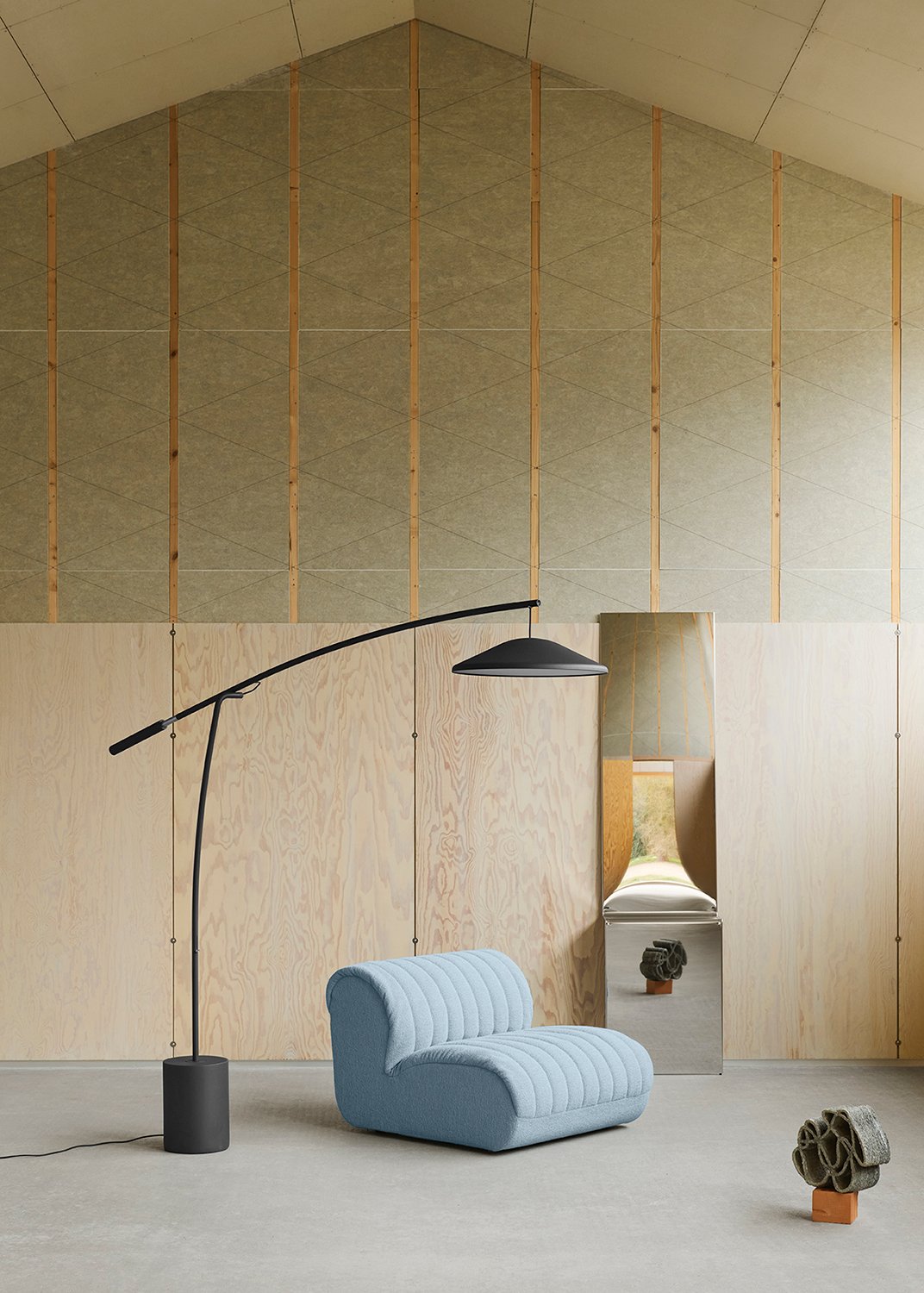
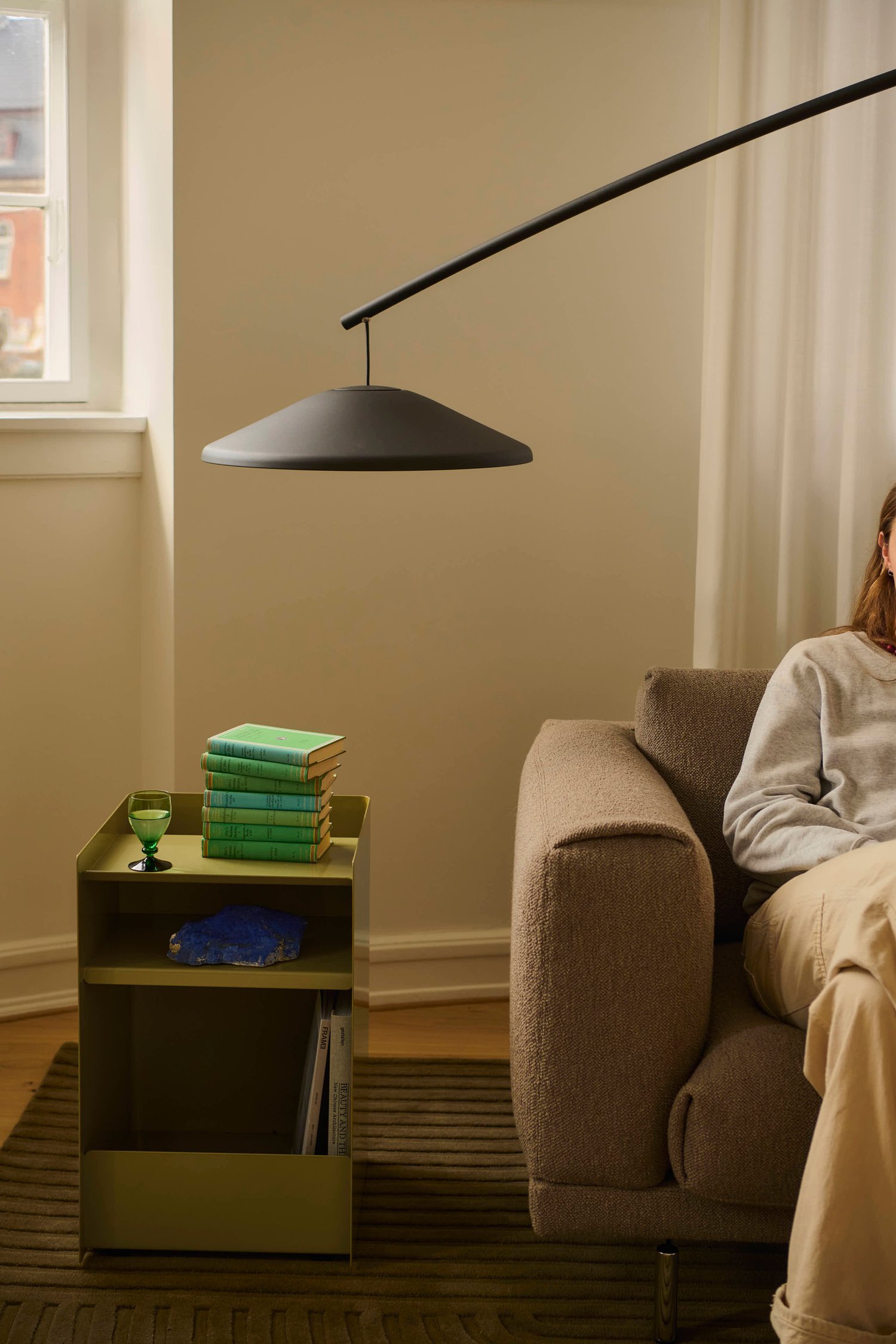
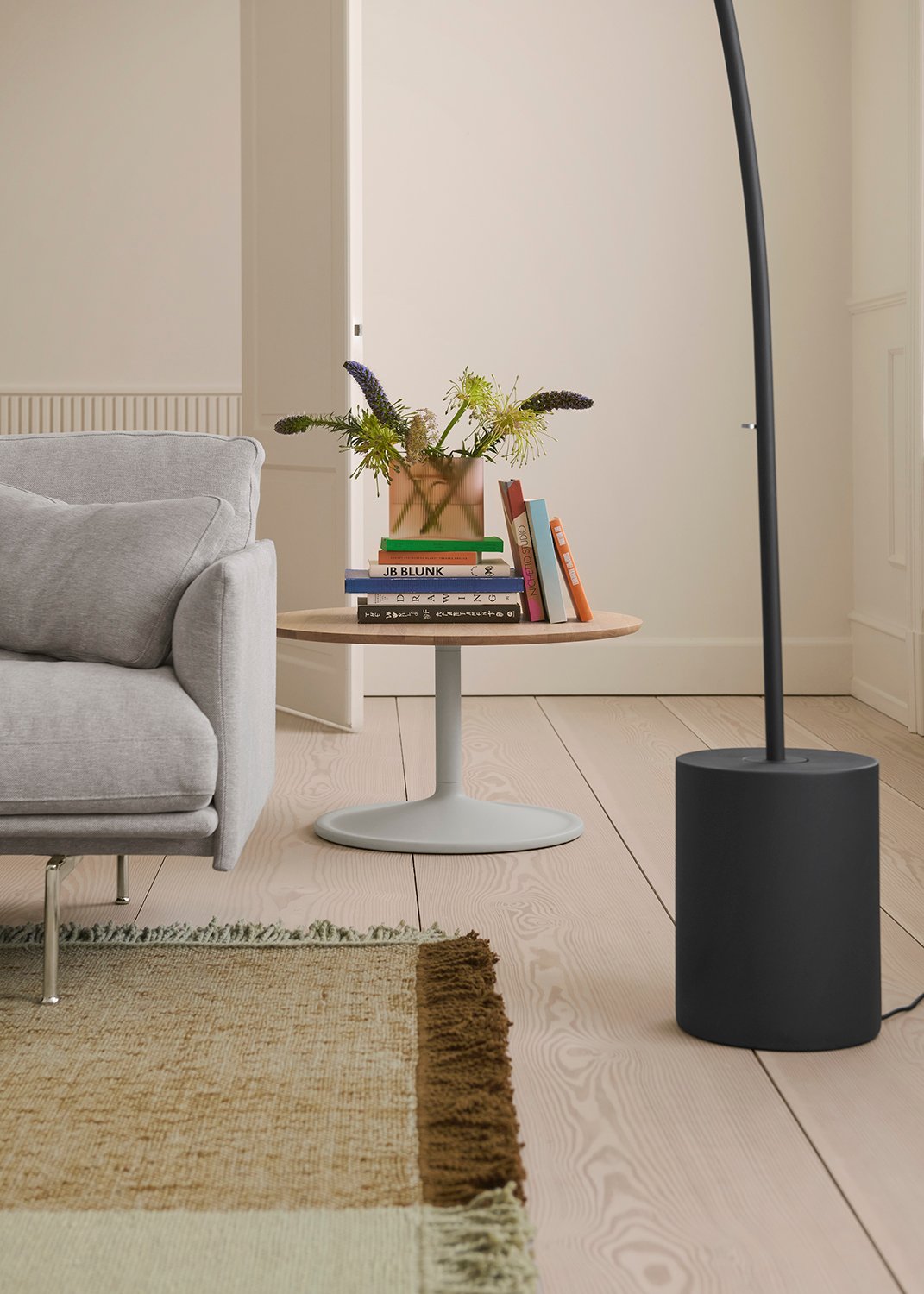
For Jon, this is what gives the finished lamp its coherence. “All the different shapes of the different elements in the lamp sort of fell into place,” he says. “They developed a form language that was coherent.”
Getting there required an iterative process which required Wolfond and Jon to learn how to challenge one another. “In our work with external designers, we want them to challenge us,” Jon says. “And we also want to challenge them.”
That dialogue can be seen in the details. The exposed thread, the softly shaped switch and the small ball joint that keeps that shade hanging correctly are each response to a specific problem. Together, they give the lamp different points of discovery.
“There are these little problems solved all over the lamp in different ways,” Wolfond says. “As your eye bounces around it, there’s a different thing to learn, a story to tell.”
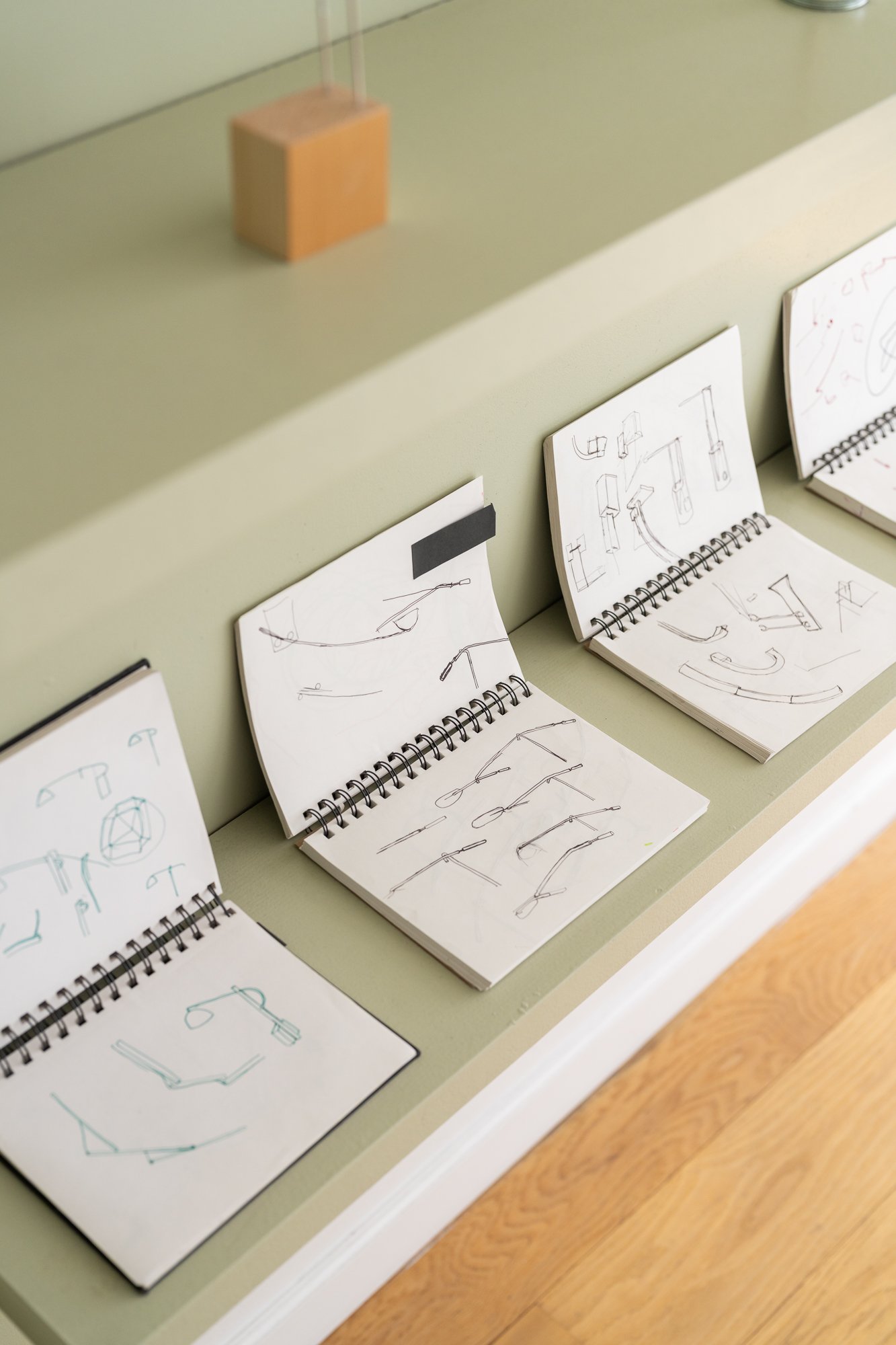
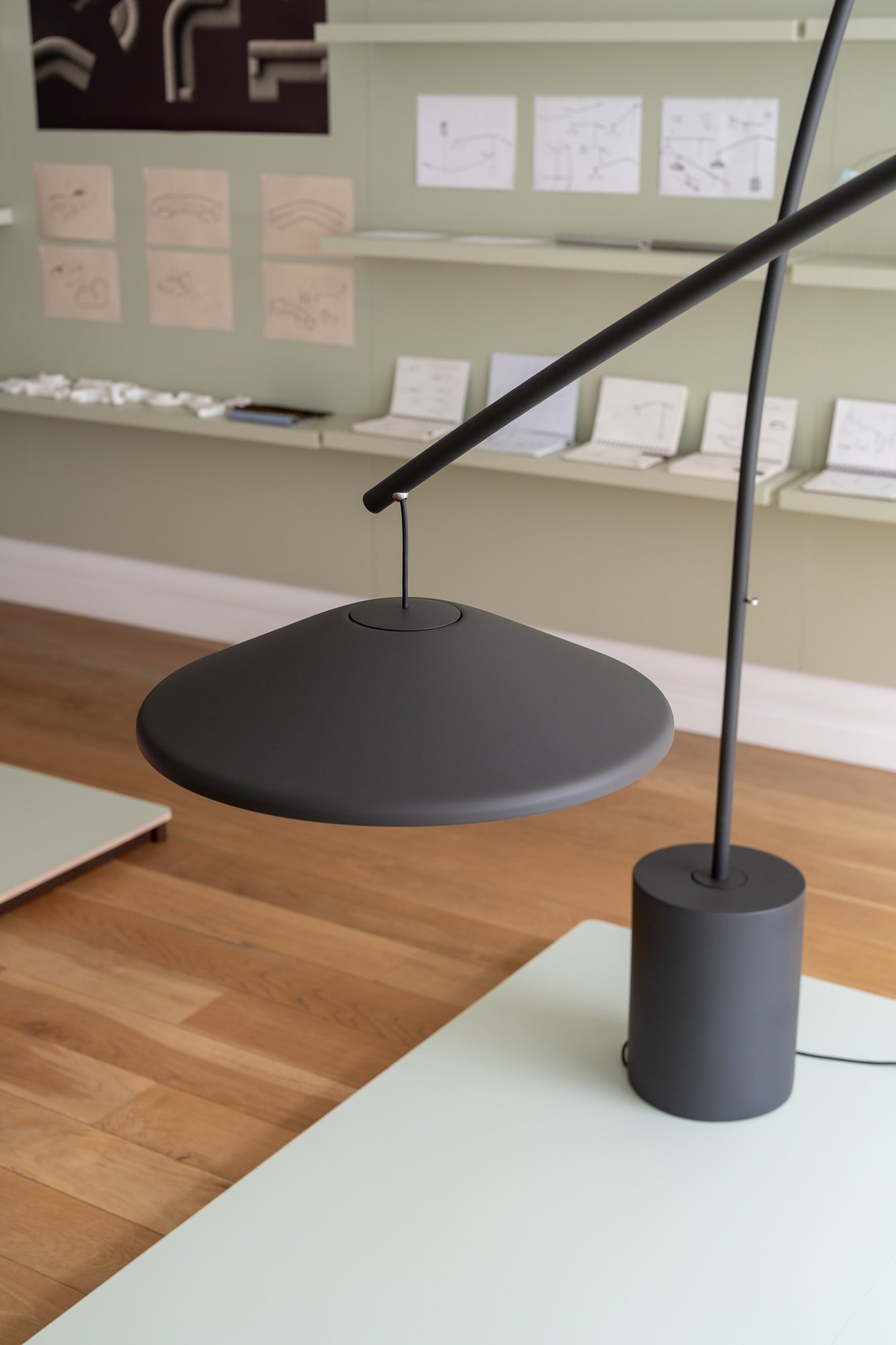
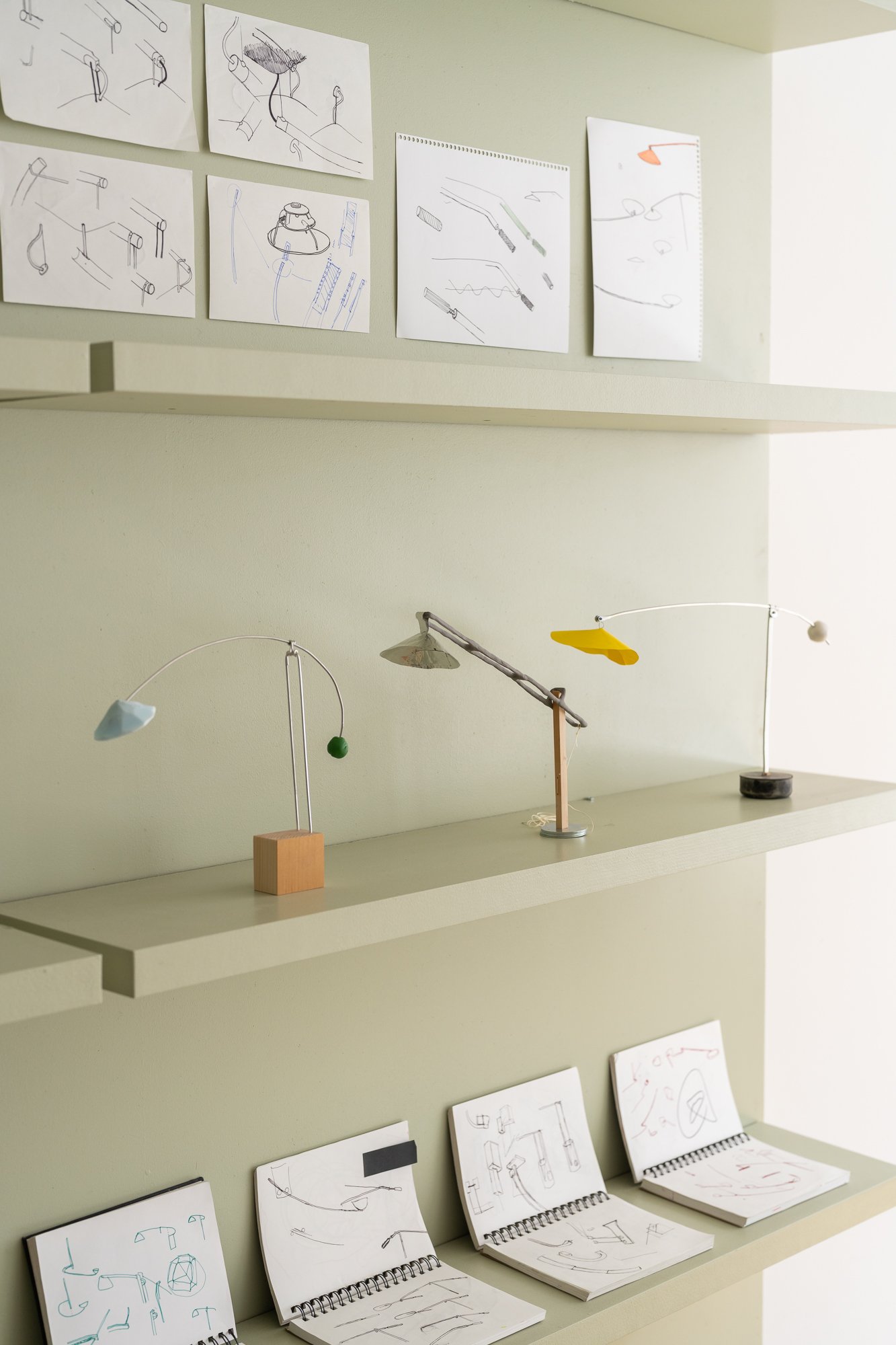
For him, that became one of the discoveries of working at this scale. “Something that big has multiple stories,” he says. “Different places where you can go and experience something completely different.”
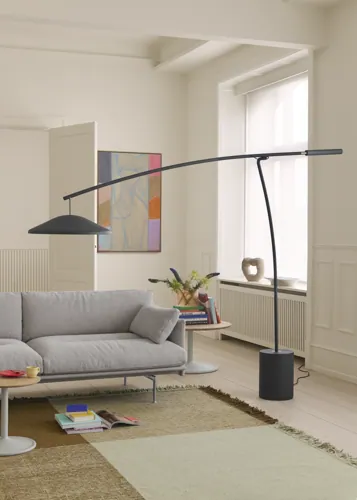
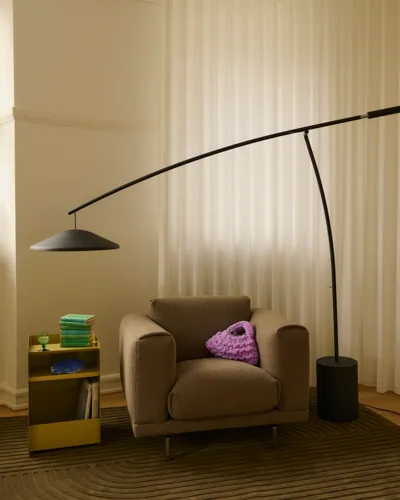
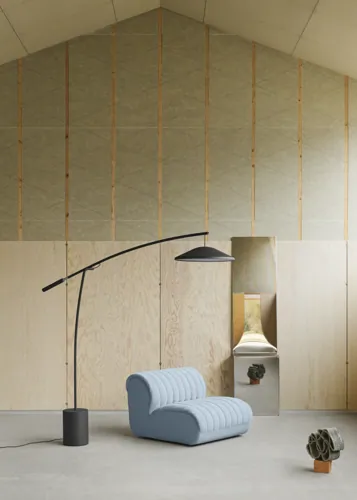
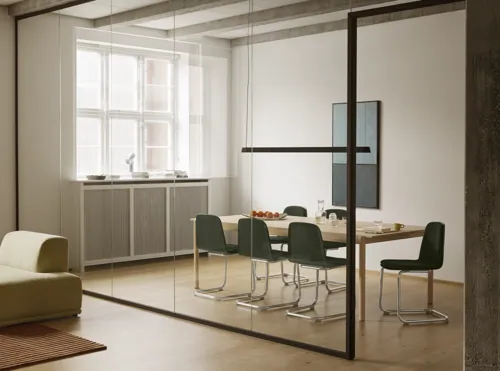
In a room, Contra can shift between those roles too. Its arm can reach over a coffee table or dining table, changing position and expression as needed. For Jon, this sense of movement is central to the design. “I really hope that people are going to try to use it in different ways,” he says. “That’s how it stands out, that it’s not static.”
Despite its scale, the lamp has an unexpected lightness to it. Wolfond describes seeing the finished piece as an unusual experience - standing beside something he had designed himself and feeling its physical scale. “It’s imposing,” he says. “It takes a minute to realize that it’s a gentle giant, like a giraffe.”
A large mechanical object, but one made to move with very little effort. Something to adjust, discover, and perhaps show to someone else. “When I picture people having the things that we design at the studio, I picture people wanting to show their guests how it works,” Wolfond says. “To share it with them and geek out.”
${contentData.items}