${ product.name }
${ product.typeTitle }
Item no ${ product.sku }
- ${ setting }
- ${ product.variantName}
Around Re-norm
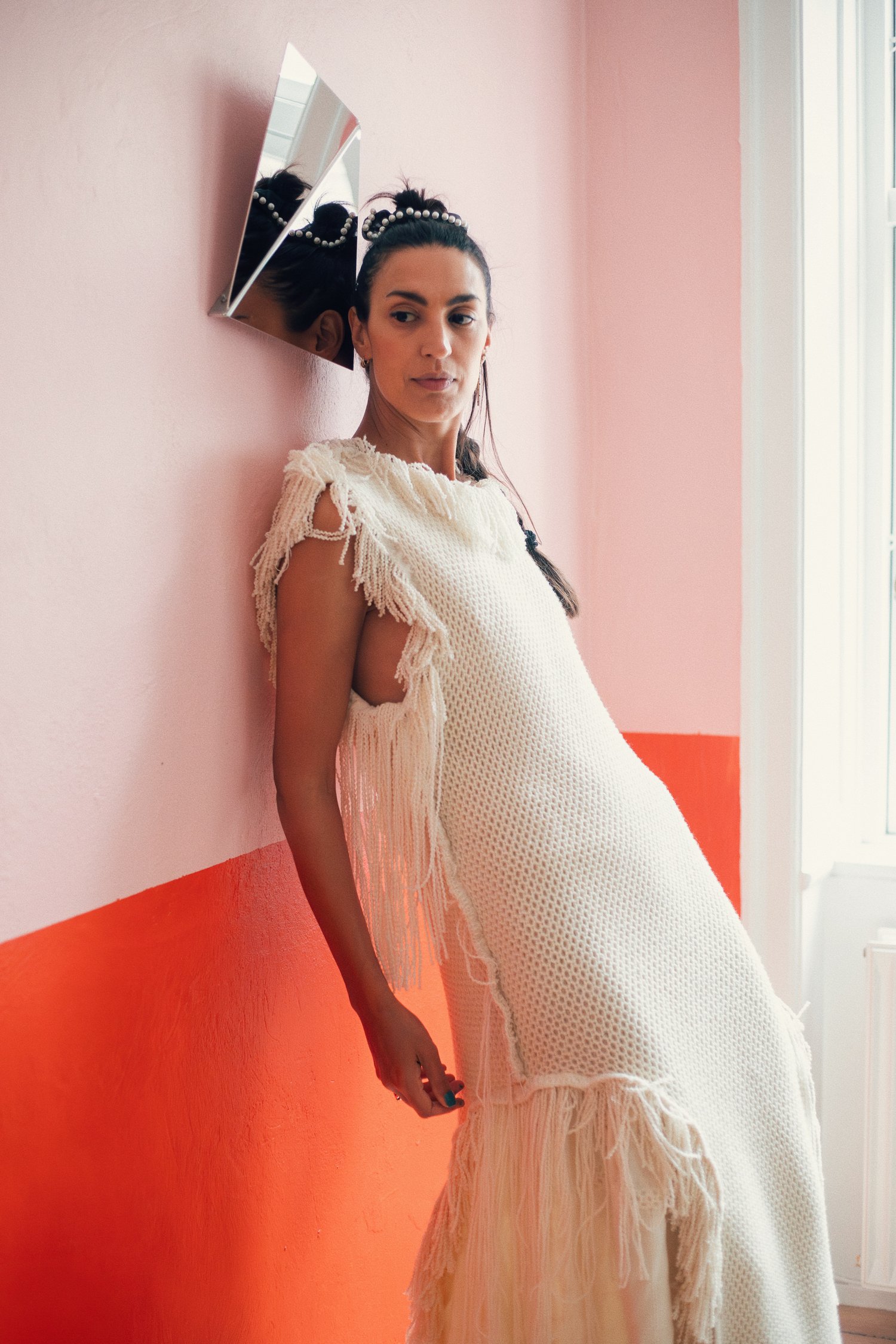
Veronica D’Souza’s home in Vesterbro moves to the rhythm of family life, conversation, and the people who pass through it. She lives here with her two daughters, in a colorful space that feels warm, open, and ready for whatever the day might bring. An entrepreneur, musician, consultant, and board member of the Danish Design Council, Veronica moves between business, social change, and the arts with an instinct for questioning familiar structures. At home, that same openness finds its place around the Re-Norm Table.
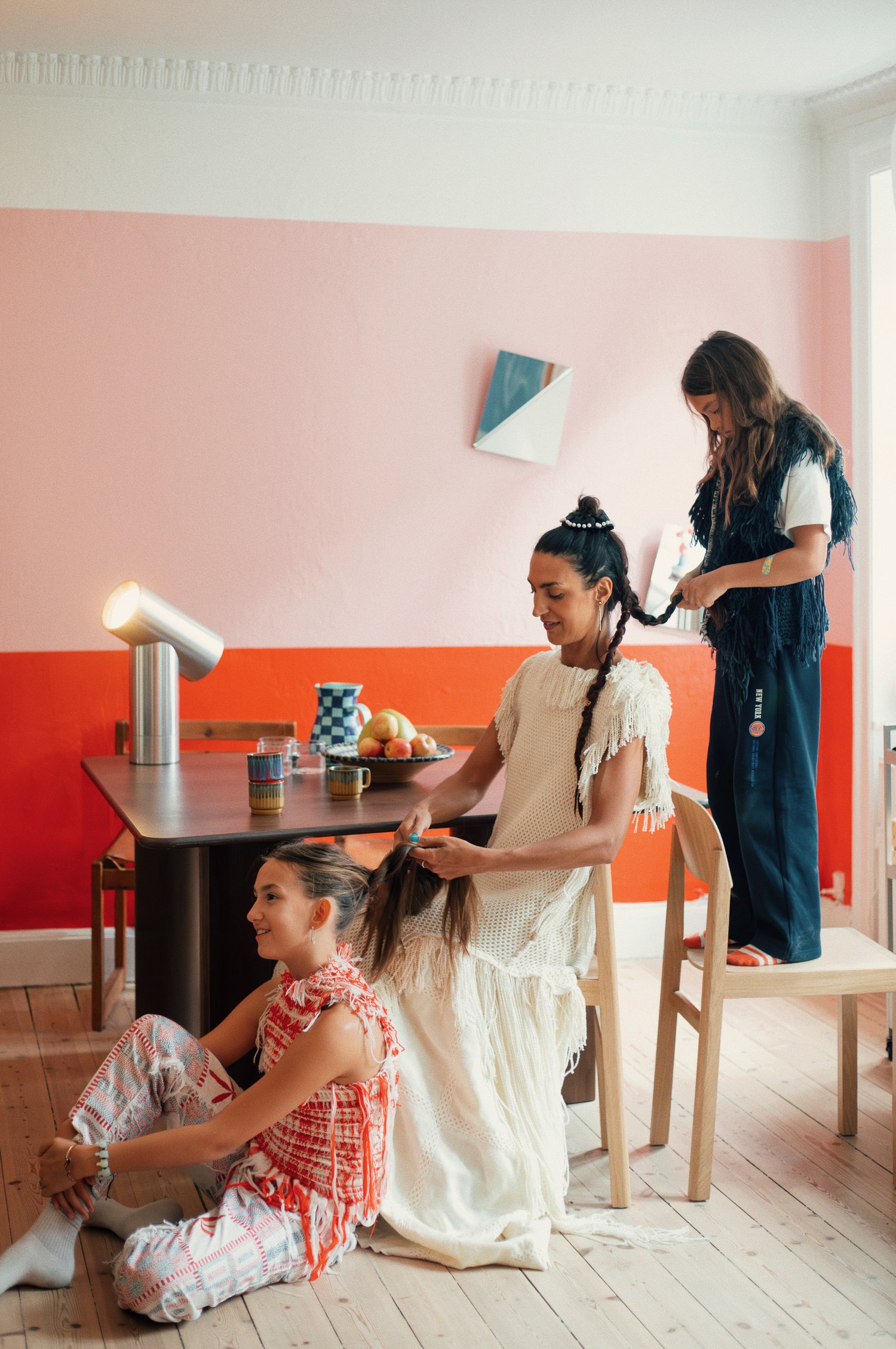
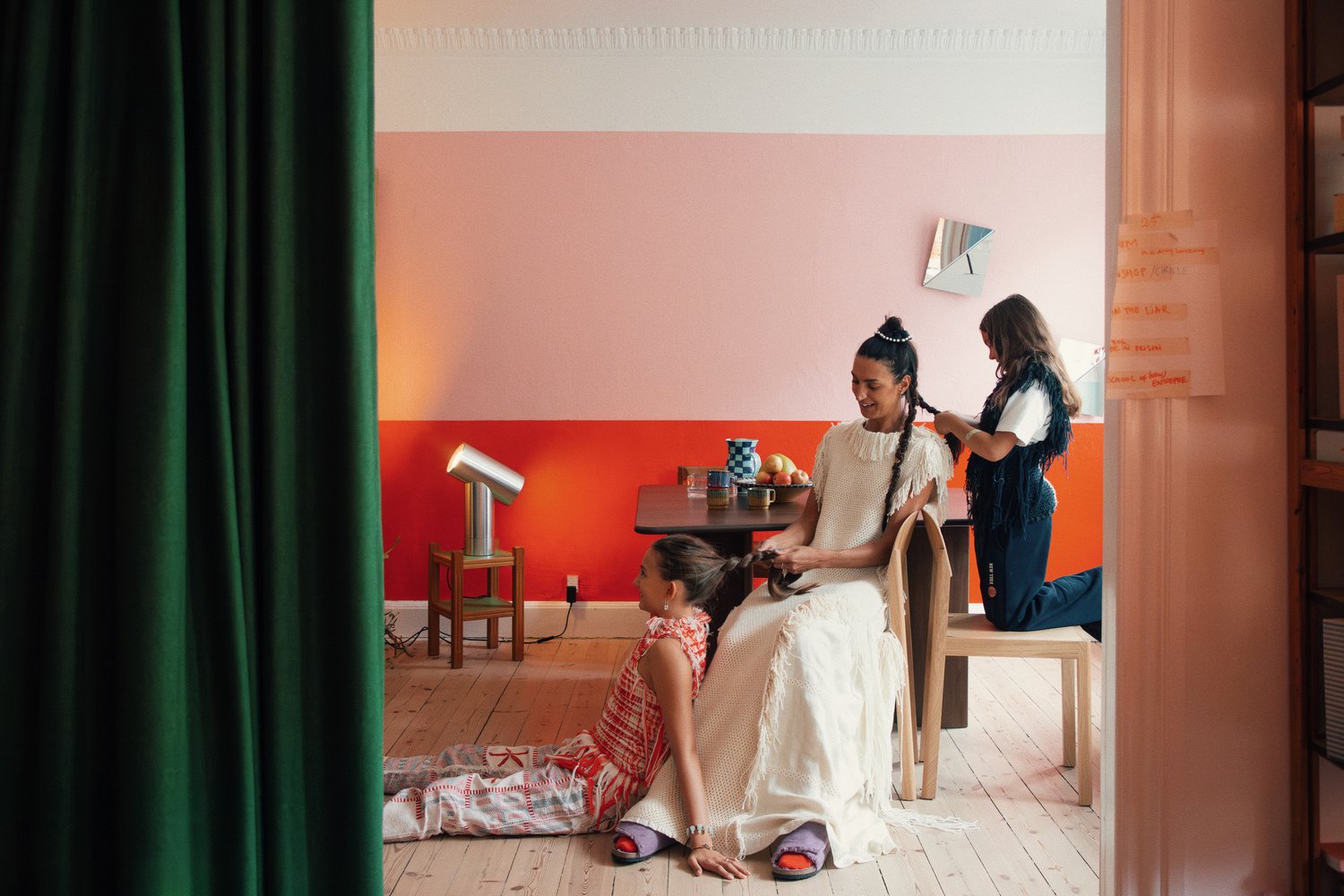
The energy of Vesterbro carries indoors. Veronica knows the people in her building, the grocers and kiosks on the street, and the community around her feels like an extension of home. Her brother lives two floors above, and her daughters move freely between the apartments. Sometimes, she says, it feels like a small vertical village.
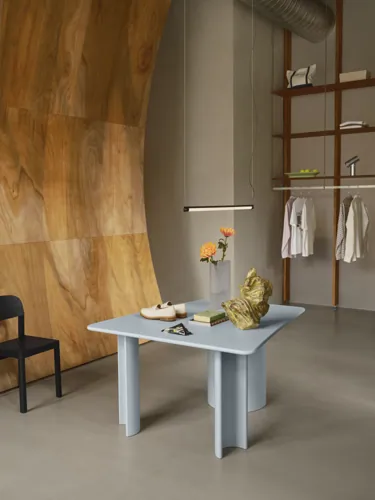
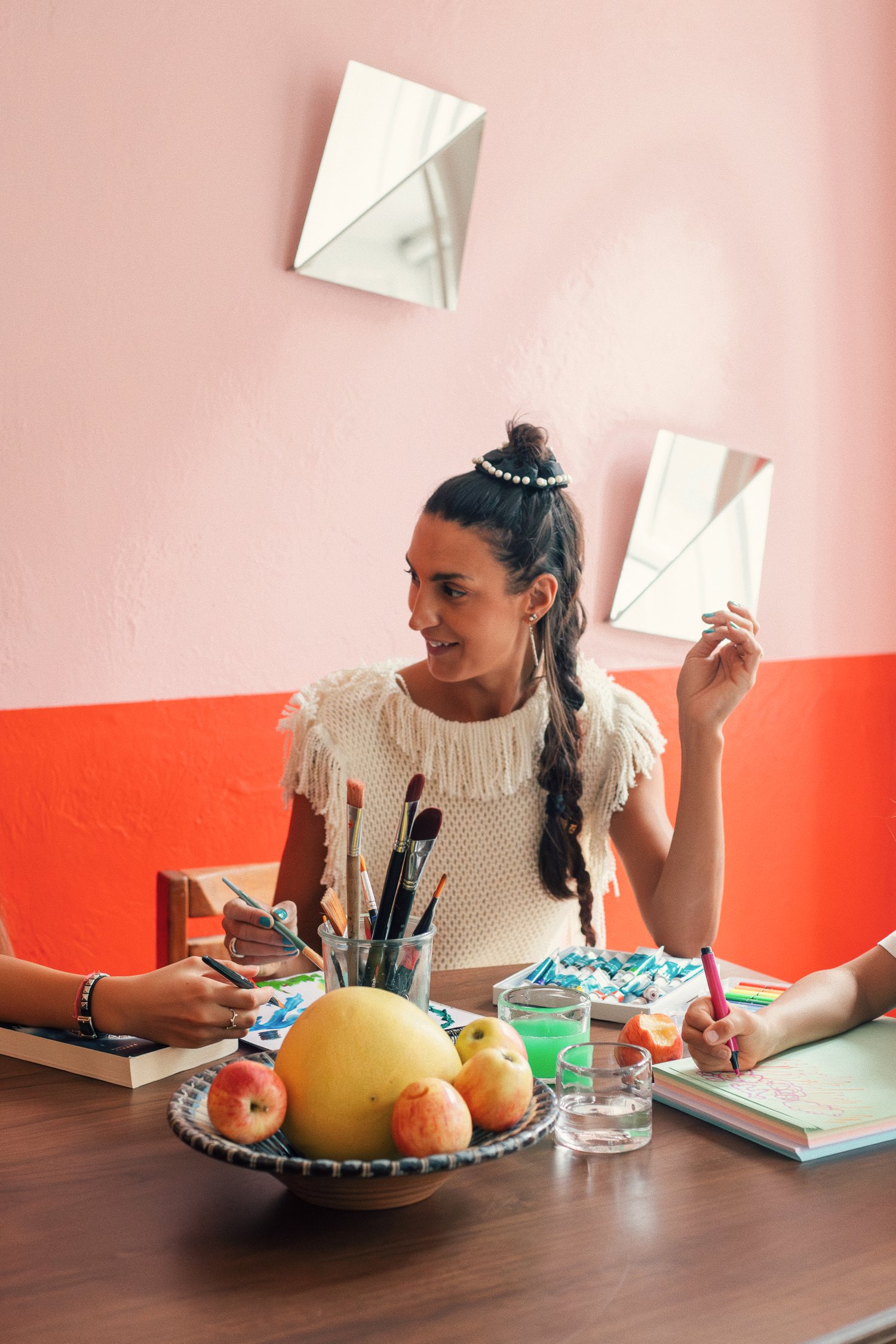
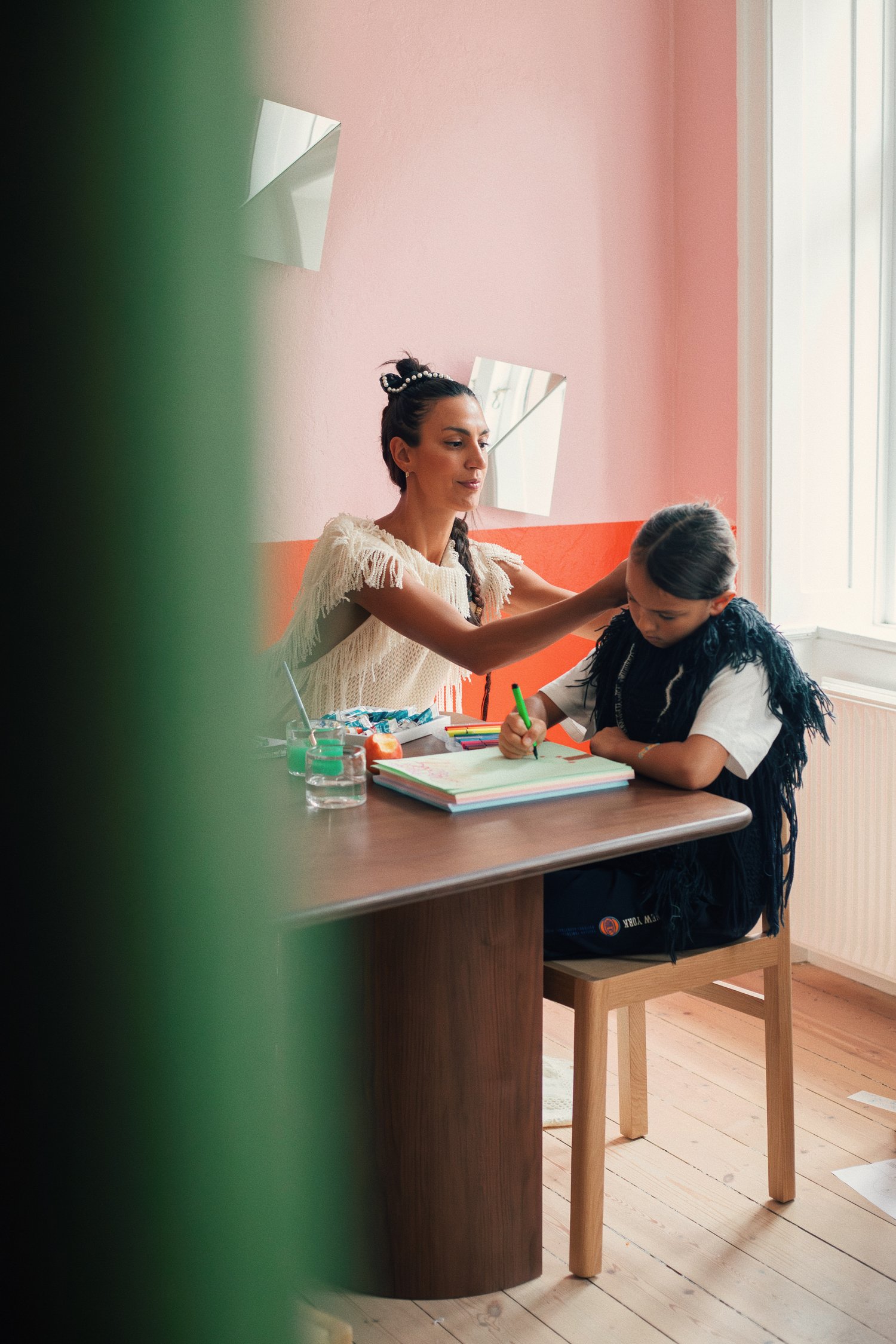
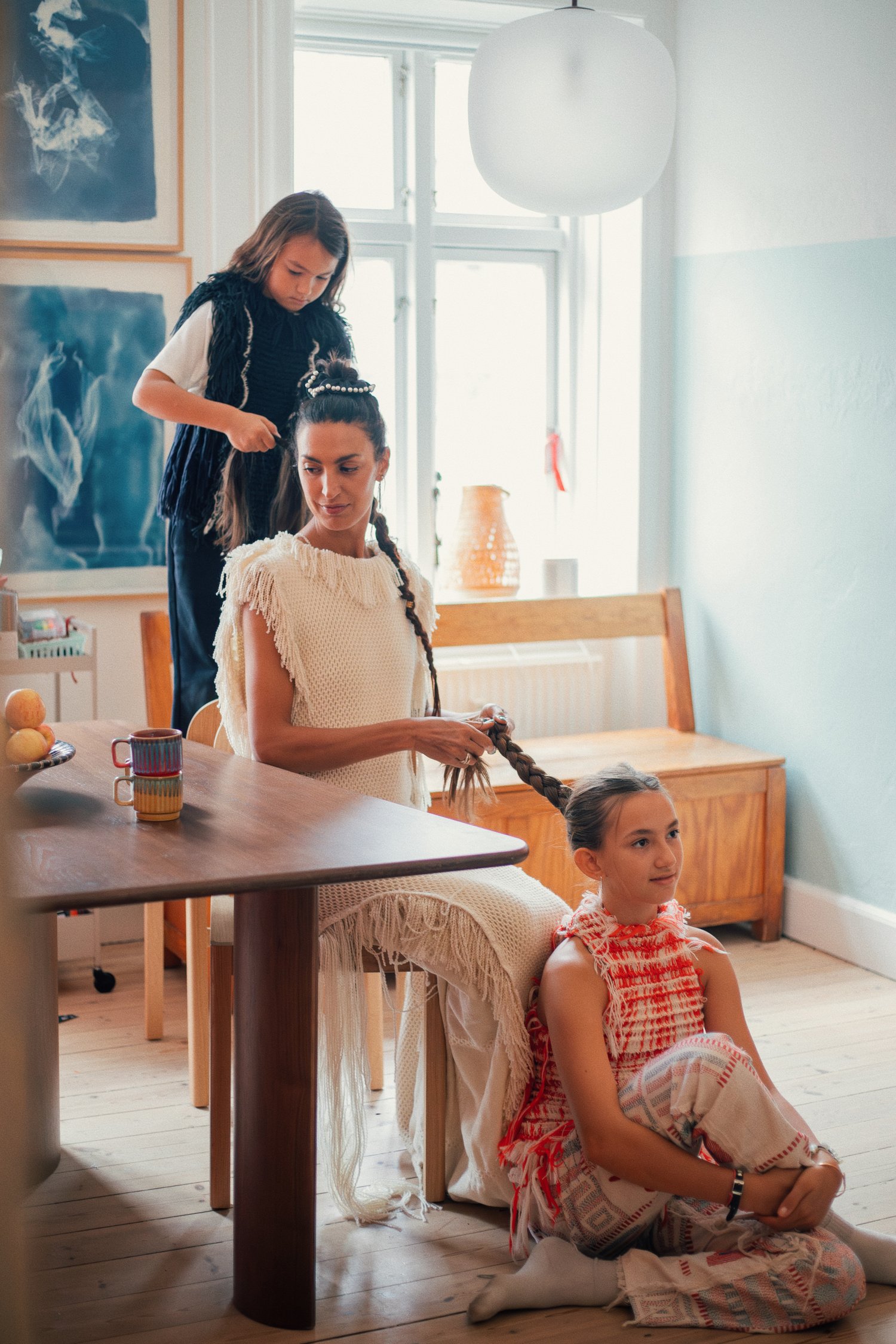
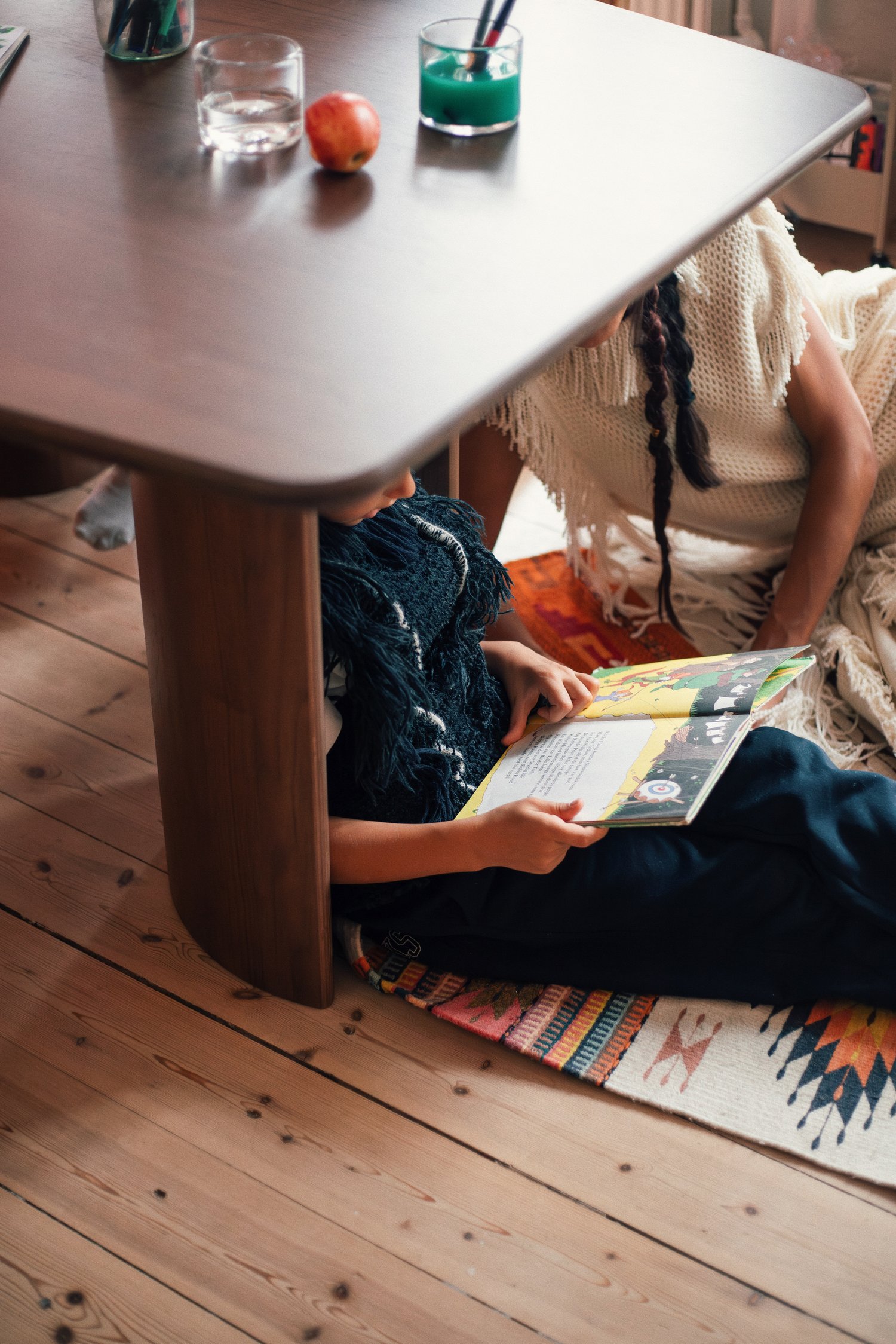
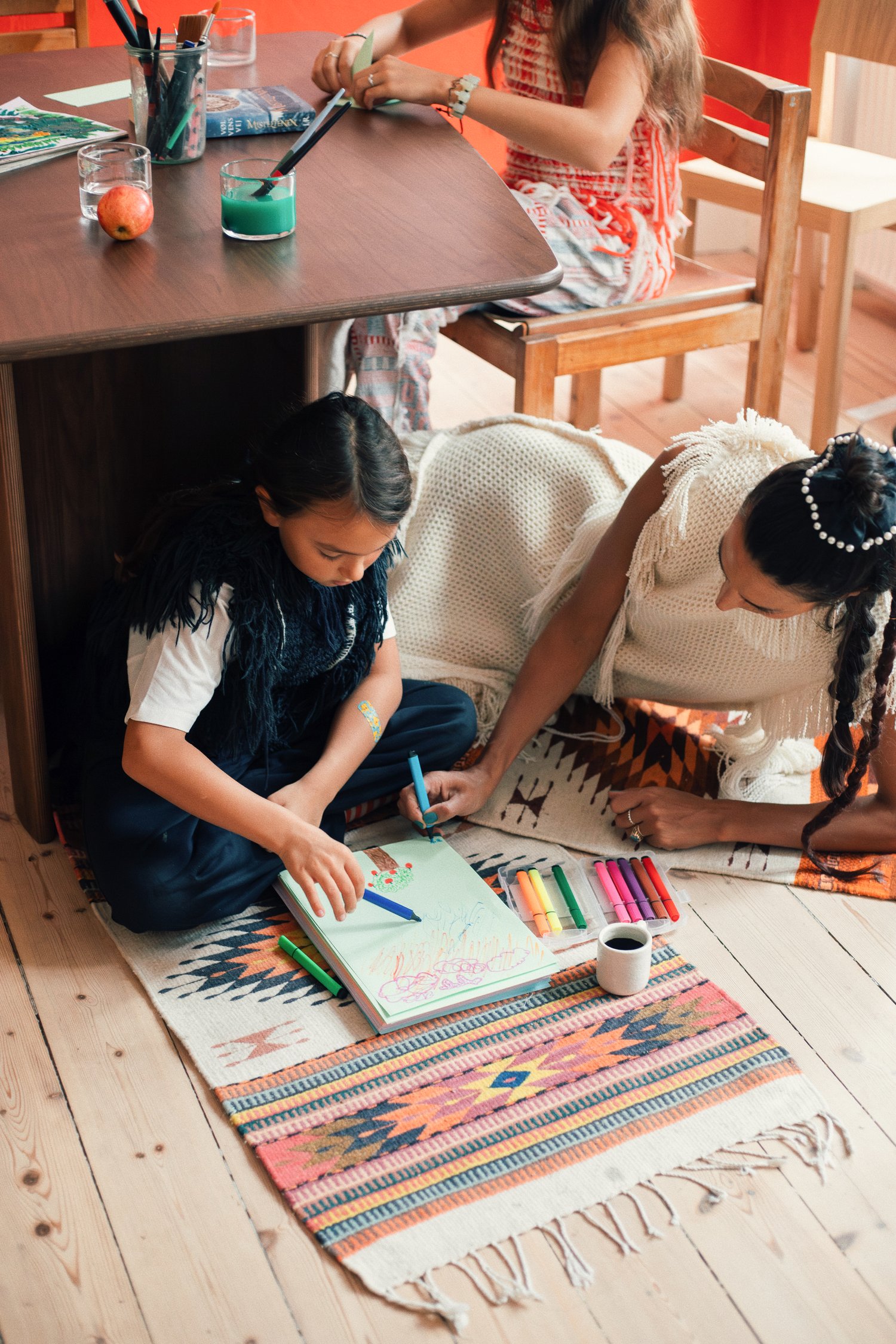
In the apartment’s compact dining space, the dinner Table has become part of the family’s daily rhythm. Her daughters eat breakfast there, draw, play cards, and bring friends home. Some evenings, six or eight girls gather around it; on others, someone rings the doorbell on a Tuesday and stays for pasta.
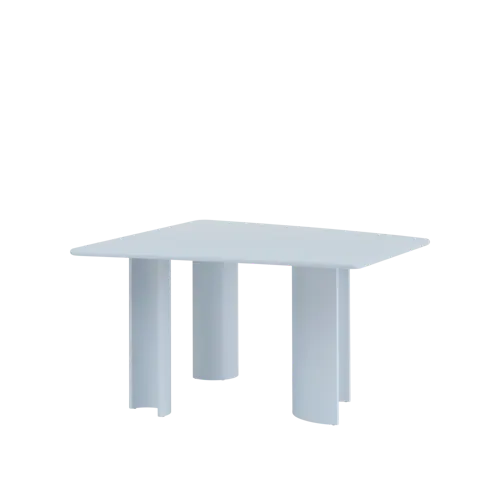
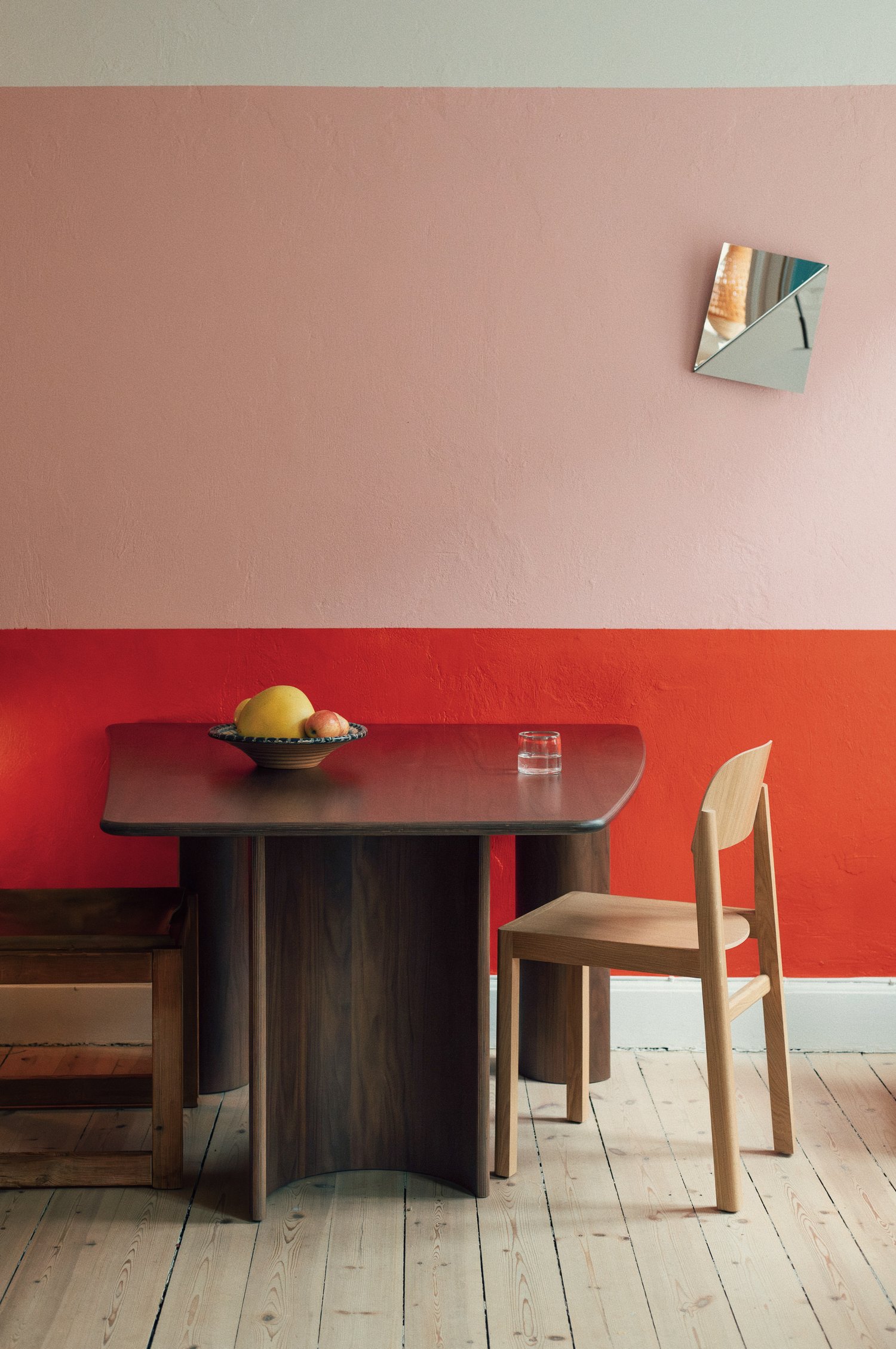
Its asymmetrical shape leaves no obvious head of the table, which speaks to Veronica’s interest in how furniture can influence who leads and who is given space. She wanted a place for the family’s rituals without fixing how they should unfold—a table that could hold different voices, different ways of sitting, and the openness to make room for one more.
That instinct to question familiar structures began long before her career. Veronica grew up in a mixed family, shaped by different cultural perspectives and by her father, who was born into an Indian family and raised in East Africa. Expected to follow a traditional profession, he became a jazz musician instead, showing her early on that another path was possible.
She has carried that thinking into her work. An entrepreneur, musician, consultant, and board member of the Danish Design Council and The Soulfuls, Veronica co-founded Ruby Cup to address period poverty and later founded Carcel, working with incarcerated women to create fair wages and new opportunities.

What brings your work in business, creativity, and social change together?
Many of us grow up believing we should choose one path, but most people are more layered than that. I have a business degree and love strategy, but I am also deeply creative. For me, entrepreneurship and music are not so different. Both begin with imagining something that does not yet exist and finding a way to bring it into the world.
That instinct was shaped by my father, who stepped outside what was expected of him to become a jazz musician. Growing up mixed also made me aware of what it means to be both inside and outside, to notice who is included, who is overlooked, and whose perspective is heard.
That has stayed with me throughout my work, from Ruby Cup to Carcel. The human aspect connects everything—creating something meaningful with people and making room for voices that are too often left out.
“I am drawn to spaces that receive too little attention, because those are often where the most important conversations need to happen.”
How do you create change that people want to be part of?
We often act as though people make decisions rationally, but we respond to desire, atmosphere, and belonging. Change has to feel inviting—like something people genuinely want to join.
I often think about parties in Copenhagen when I was younger. The place everyone wanted to be was usually a small kitchen in someone’s apartment. No one had to explain why; it was simply where you wanted to be. If change could feel like standing in that kitchen, we would not need to convince people that it mattered.
That idea also shapes how I gather at home. The table matters less than the invitation and the feeling that there is room for you. I started a series of open-house gatherings with that in mind: anyone could come by, bring a dish, and add it to the table. Once you have shared a meal in someone’s home, it becomes much easier to reach out again.
“A table can reinforce power, but it can also create space for different voices and different ways of being together.”
How has motherhood shaped the way you live and work?
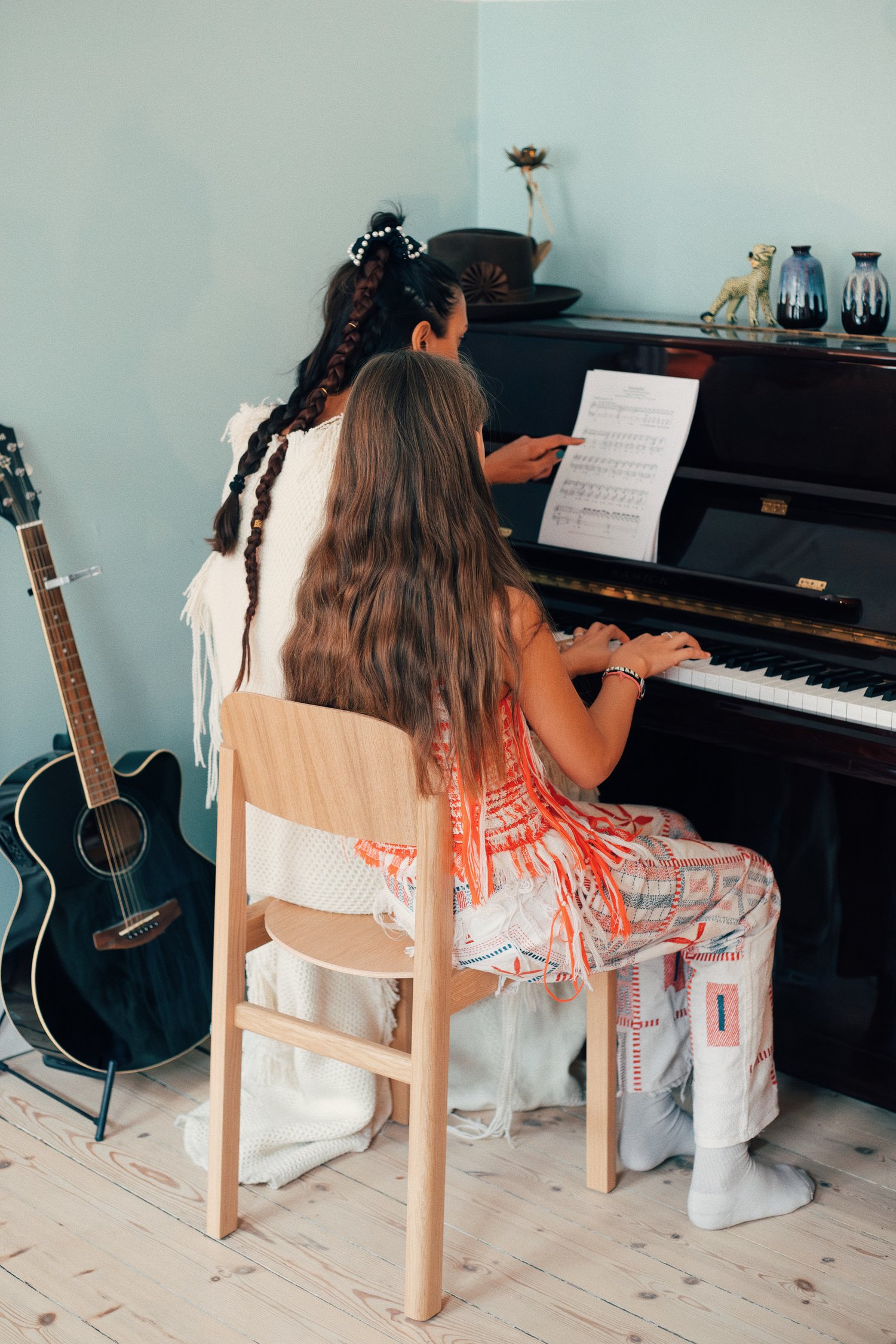
My daughters are probably the most uncompromising philosophers I know, and spending time with them has made me much clearer about what matters. I think of them as my board of advisors of life, which is also why I have become more intentional about the small rituals we share at home.
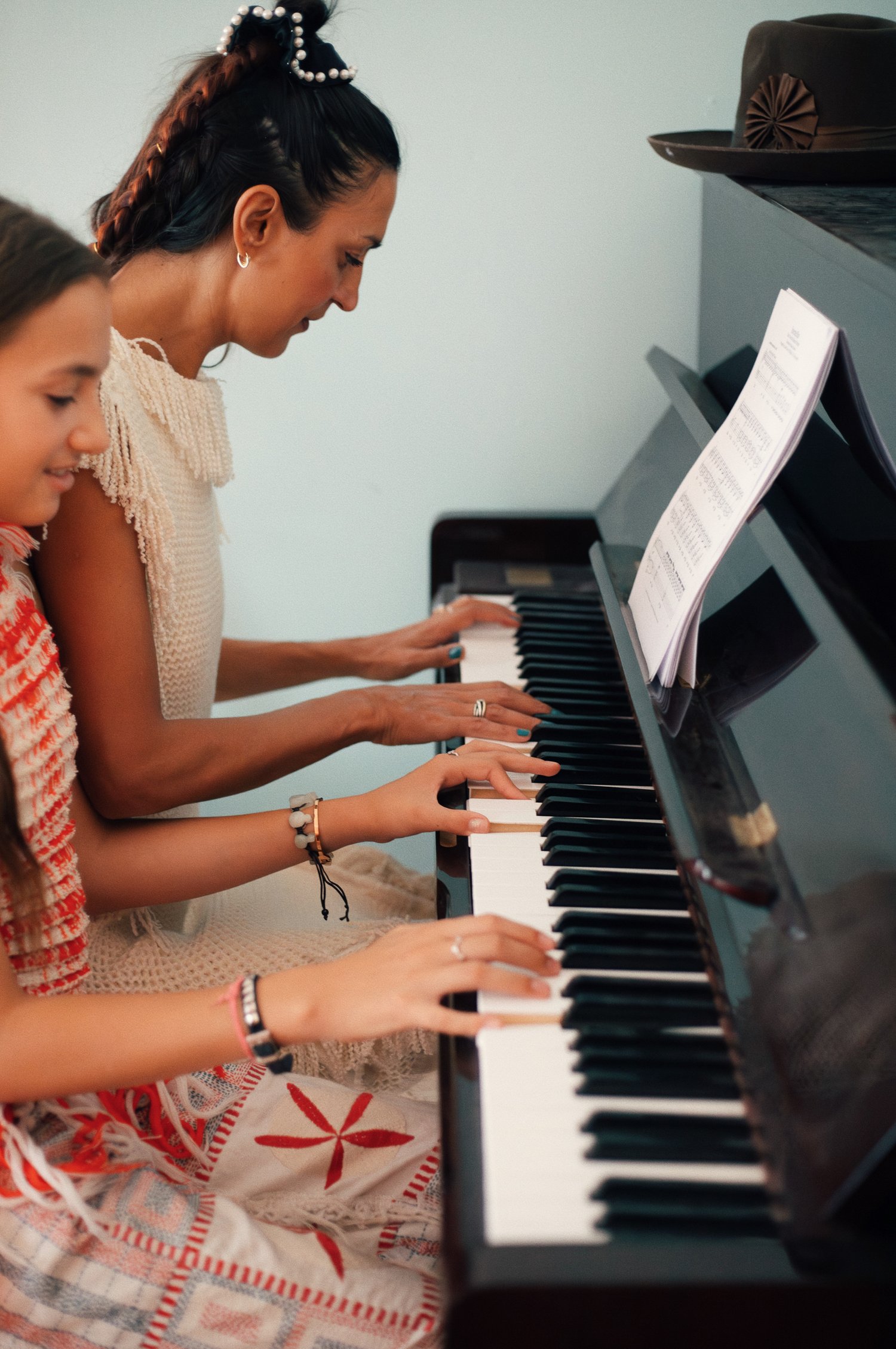
I am a night person, so mornings have never really been my thing. But a year ago, I realized breakfast was the only guaranteed meal I knew all three of us would share, so I decided to turn it into our time. We listen to an album by one artist, light candles, choose the tea of the moment, and play cards. Somehow, breakfast has become one of my favorite parts of the day.
At dinner, we go around the table and share three good things from our day. There is usually a lot of cooking, tasting, and experimenting, and often guests too. It is not unusual to have six or eight girls around the table. Sometimes they cook and invite me for dinner. I love that. I hope our home shows them that life does not need to be divided into neat categories. Work, family, friendship, and creativity can exist together.
“Change has to feel inviting—like the kitchen at a party where everyone naturally wants to gather.”
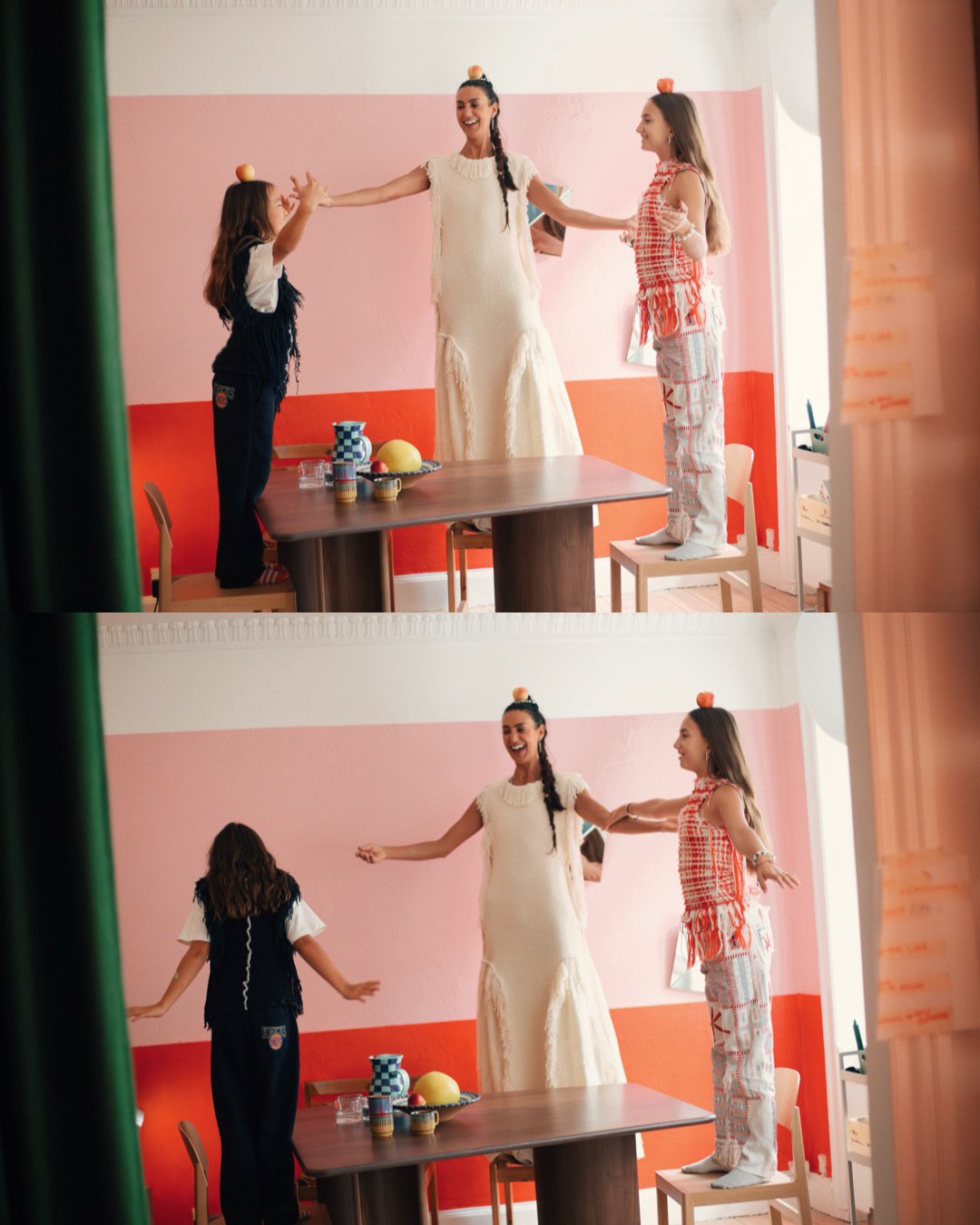

How does the Re-Norm Table shape the way you gather?
What interests me about the Re-Norm Table is that it moves away from the traditional idea of a table with a clear head position. Its asymmetrical shape feels open and informal, allowing people to gather without one place carrying more authority than another.
I became aware early in my career of how much a seat at the end of a table could influence a room. It made me realize that furniture can quietly shape who feels confident, who leads, and who is given space.
At home, the table becomes part of family life. We use it for meals, work, drawing, and play. It is the kind of table you can sit on, lie on, or stand on. Furniture should never hold you back, and there should always be room for one more.
What makes a home feel welcoming to you?
I love architecture, design, and color, but I can make a home from almost anything. It is really about atmosphere and the energy people bring into a space. You can immediately sense whether there is warmth and whether there is room for you.
I have made homes many times in my life, and my priorities have shifted. I remember once thinking I wanted my home to signal that I was becoming an adult. Now, I want a home that is not about things, but about life.
For me, home is about community and openness. It is people coming by, someone ringing the doorbell on a Tuesday and staying for pasta or a game. A welcoming home is less about the objects and more about the feeling that there is room for you.
${contentData.items}