${ product.name }
${ product.typeTitle }
Item no ${ product.sku }
- ${ setting }
- ${ product.variantName}
making sense of lighting specs — where do i begin?
our glossary of light makes understanding the technical side of lighting easy and the process of decorating with light at home fun and intuitive.
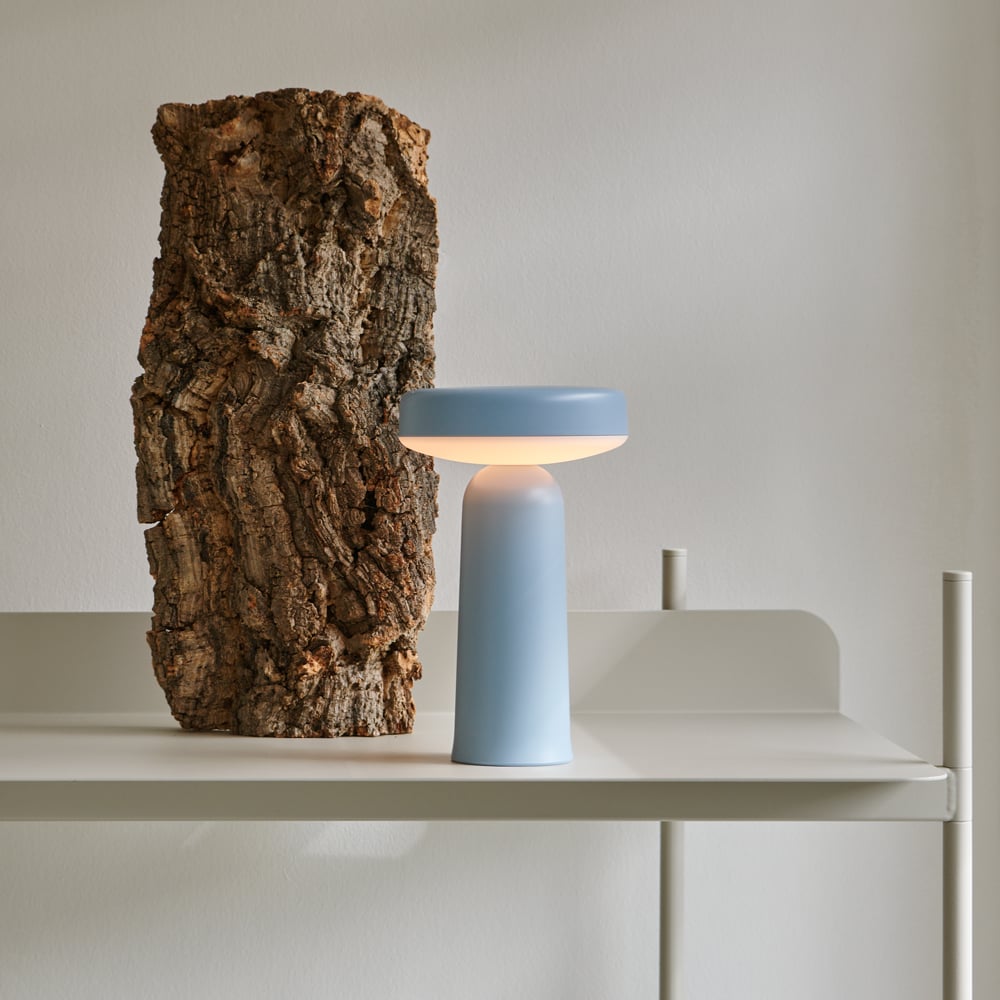
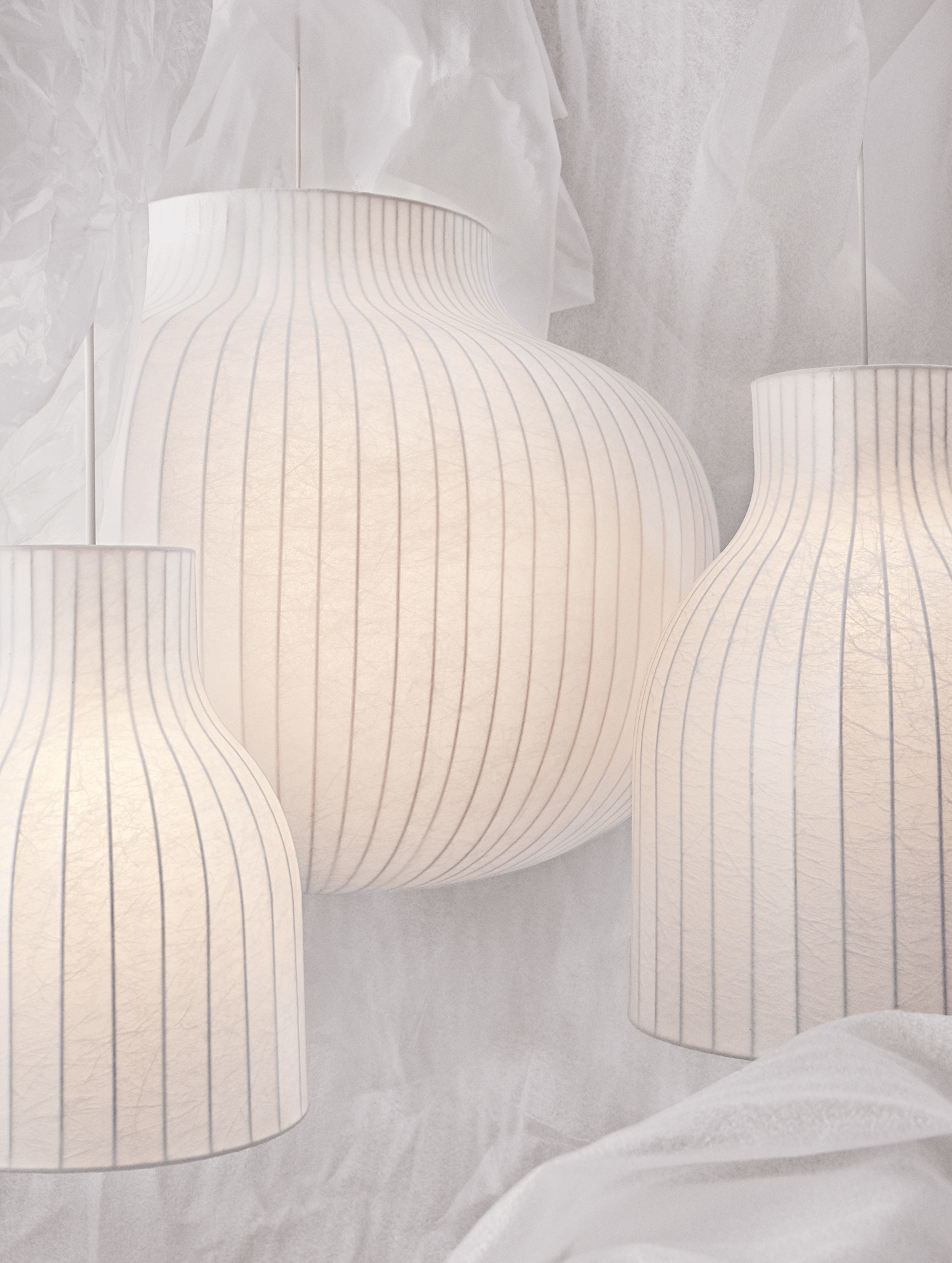
Lumen (lm) indicates the amount of light a light source emits. The higher the Lumen value, the stronger the light feels to us. In other words, the higher the Lumen, the more light you get from a light source.
Our lighting collection ranges from around 200 to 2000 lm in some of our largest pendants. For reference a candle light equals about 12 lm.
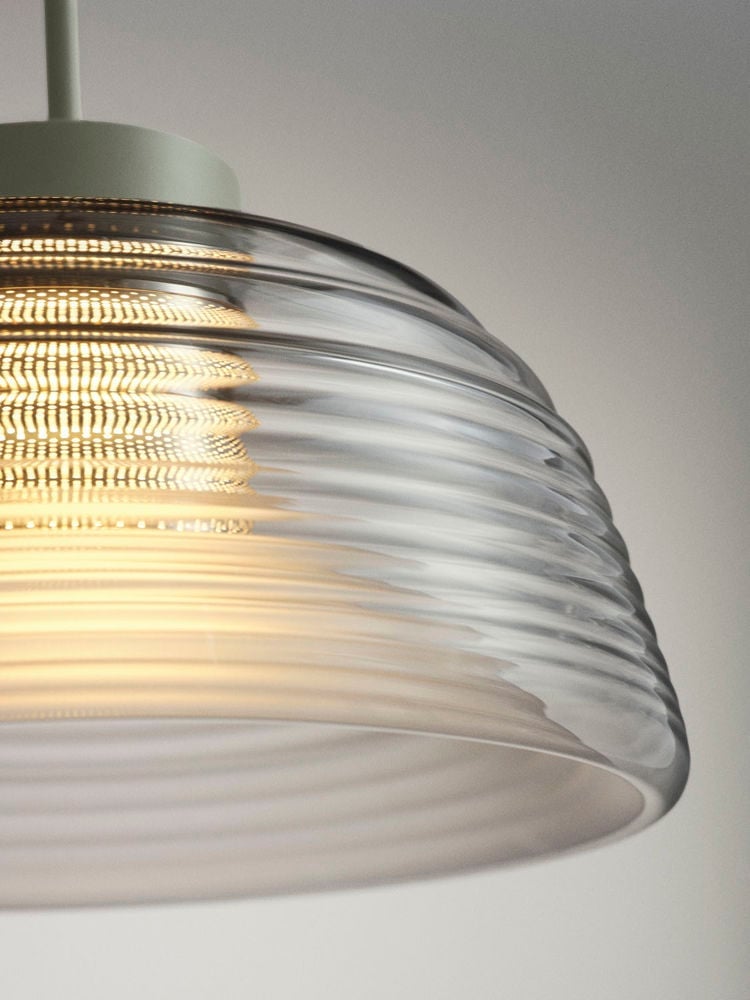
When we talk about the lifespan of an LED light source, we use the term Lumen maintenance. Unlike traditional light sources such as incandescent bulbs, LED light sources rarely die out altogether, instead LED depreciates over time due to heat, slowly decreasing its total Lumen output over time (see below).
For example, Linear Table Lamp has a Lumen maintenance of 70% and 48.000 hours. That means that if the lamp is turned on non-stop, it will give light for the next 5,5 years before the lumen intensity has decreased to 70%.
We strive to develop all future lamps with replaceable LED light sources.
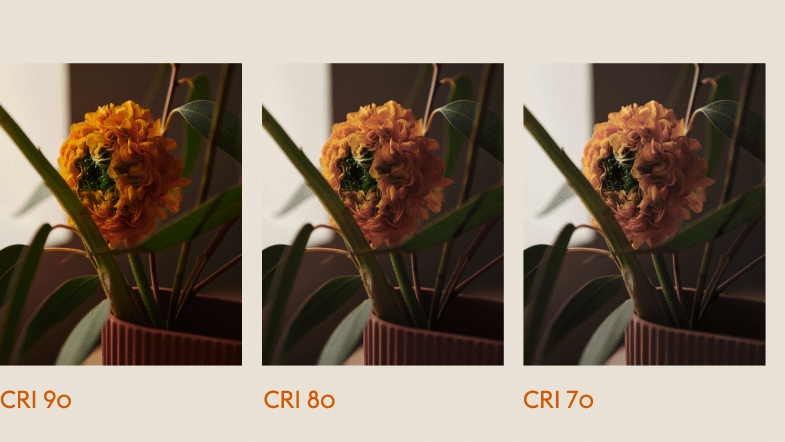
CRI stands for Color Rendering Index, a measure of light’s color reproduction. In simpler terms, it indicates a light source’s ability to faithfully reproduce or show colors in our environments.
A high CRI means good color reproduction while a low CRI indicates the opposite.
CRI ranges from 1 to 100. We recommend using light sources with a CRI of 90 or more in order to reproduce colors faithfully. Anything lower may play tricks on us, making a person’s complexion sickly blue or deciding if an apple looks fresh, or not.
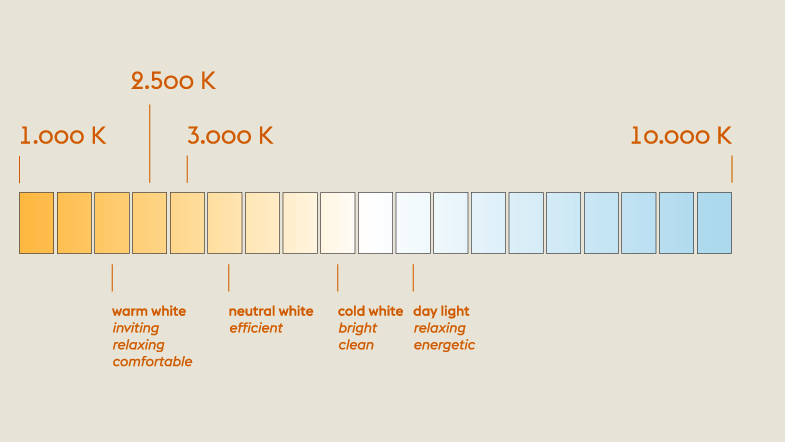
Kelvin (K) defines the color temperature of the light. For reference, a low color temperature is similar to the light you get from a candle, while a high color temperature feels like bright daylight and blue skies.
A low color temperature gives a warm, yellowish light suitable for cozy, ambient lighting for relaxing and socializing. Meanwhile, a high color temperature gives a cold, bluish light better suited to work environments, as it promotes concentration.
Muuto's lamps typically range from 2500K–3000K, making them ideal for a broad range of activities and environments.
Is the light bulb included? Which one should I use with my lamp? Is the lamp dimmable? Find all the information you need on each of our lamps in the Product Fact Sheets.
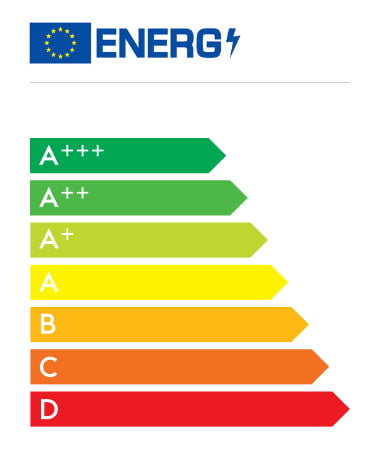
As of 2021, the EU established new standards for energy labels to maximize energy savings by 2030. The color scale of A to G indicates the rescaled energy efficiency class, the upper level A being reserved for the efficient light sources of the future. Below it, a number states the energy consumption in kWh per 1000 operating cycles.
${contentData.items}