${ product.name }
${ product.typeTitle }
Item no ${ product.sku }
- ${ setting }
- ${ product.variantName}
Muuto Design Contest
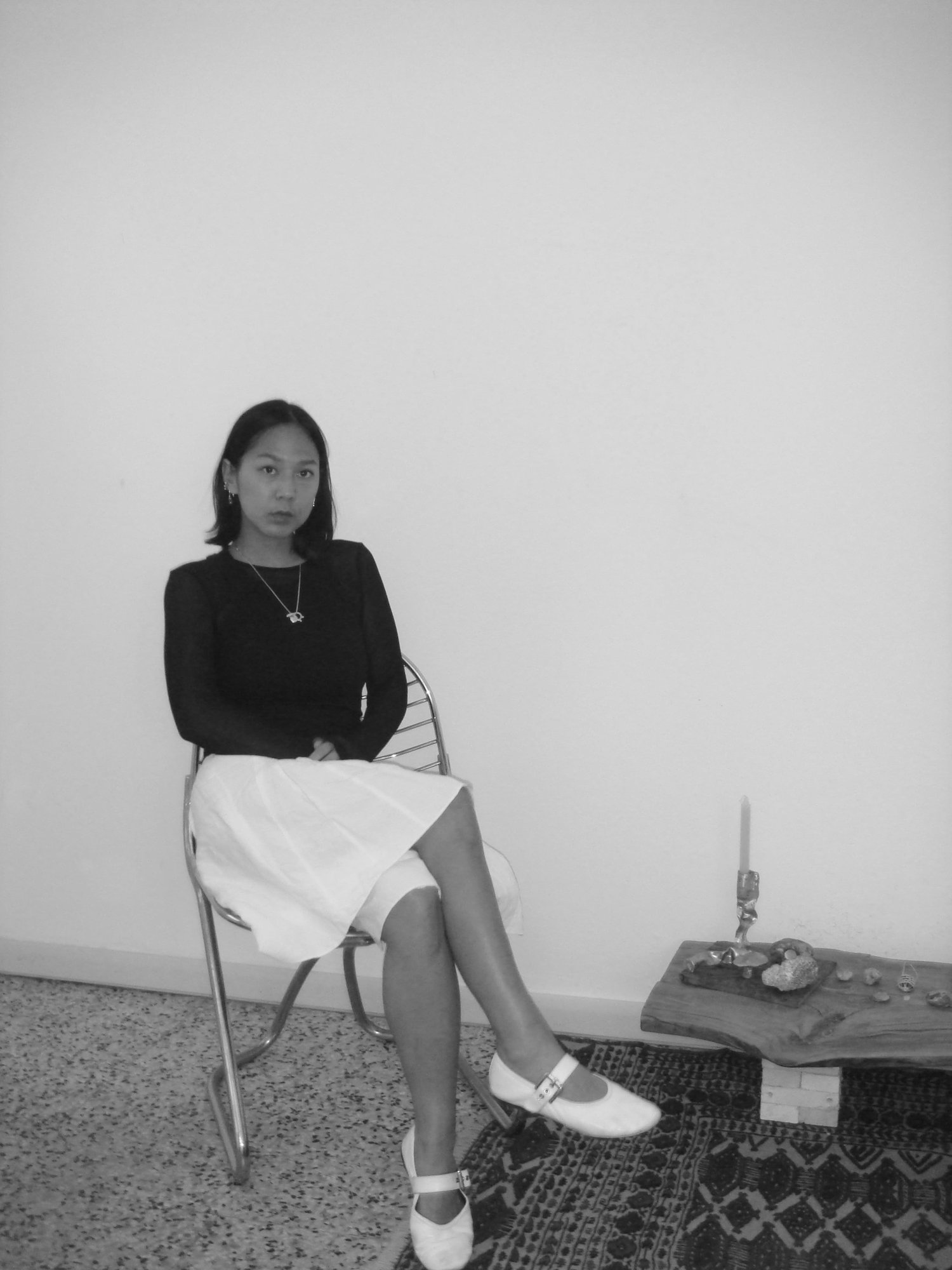
For Gabriella Mozo, Milan-based designer and runner-up in Muuto Design Contest 002, some objects begin with form. Others begin with a way of looking. Her approach almost always starts with the material — how it behaves, how it changes, and what it reveals when pushed. Her entry, Erosion Container, emerged from an observation made while travelling through India, where naturally eroded rock formations became the starting point for a project shaped by process, surface, and the quiet transformation of material over time.
Translating erosion into object and material
Before moving into product design, she worked in womenswear, where each season begins not with shape but with fabric: how it drapes, holds, resists. That way of working has stayed with her. Rather than imposing form, she tests the limits of a material—learning through making, allowing structure and surface to emerge in the process.
Her entry to the Muuto Design Contest, Erosion Container, began not in the studio but on a journey through India. Traveling by car from Jaipur to Jodhpur, Mozo noticed a series of mysterious rock formations scattered across the landscape—boulders shaped into smooth, concave depressions. Forms that looked almost intentional, but weren’t.
“I imagined there must have been water there,” she explains. “Some kind of erosion shaping the stone.”Gabriella Mozo
Working with unpredictability and material behaviour
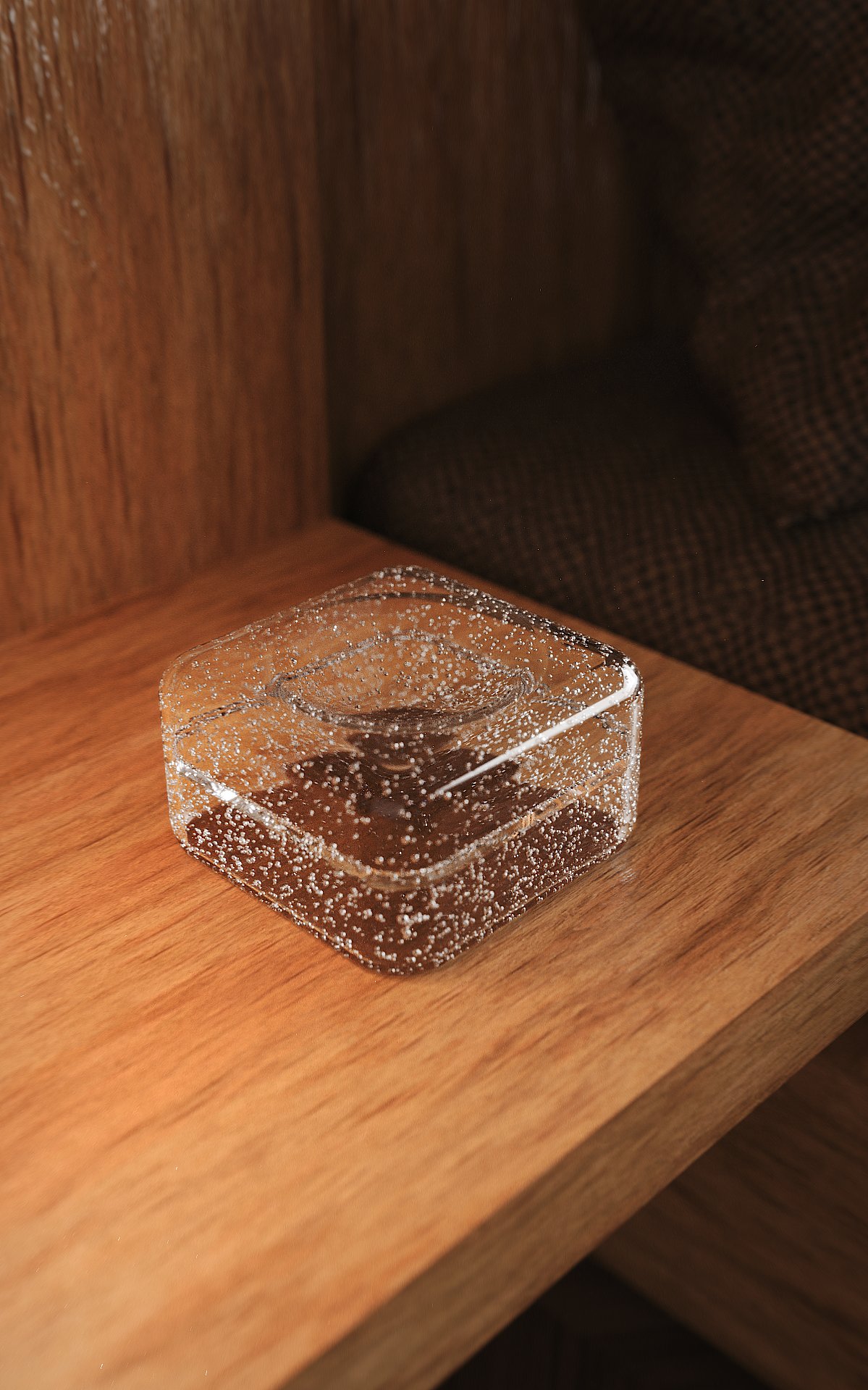
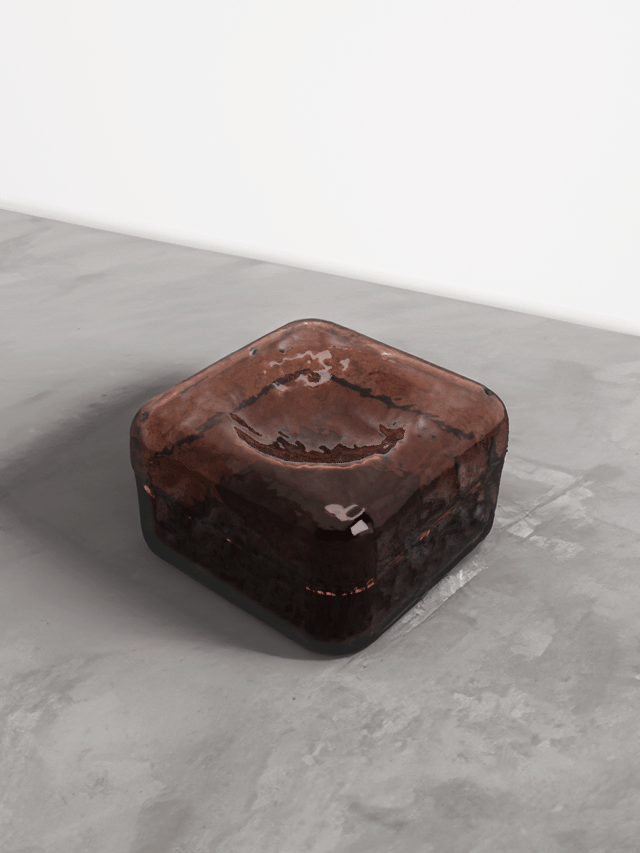
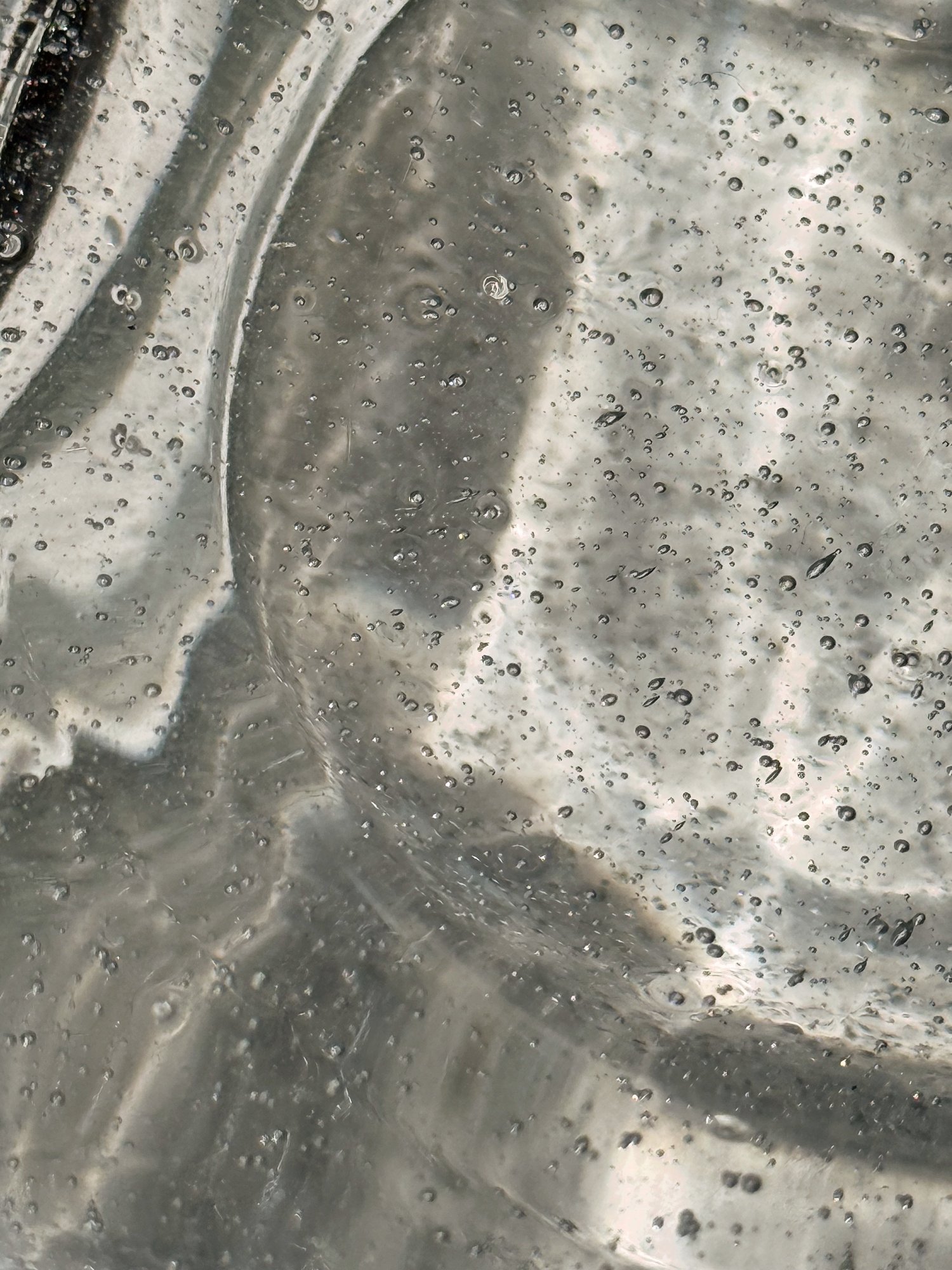
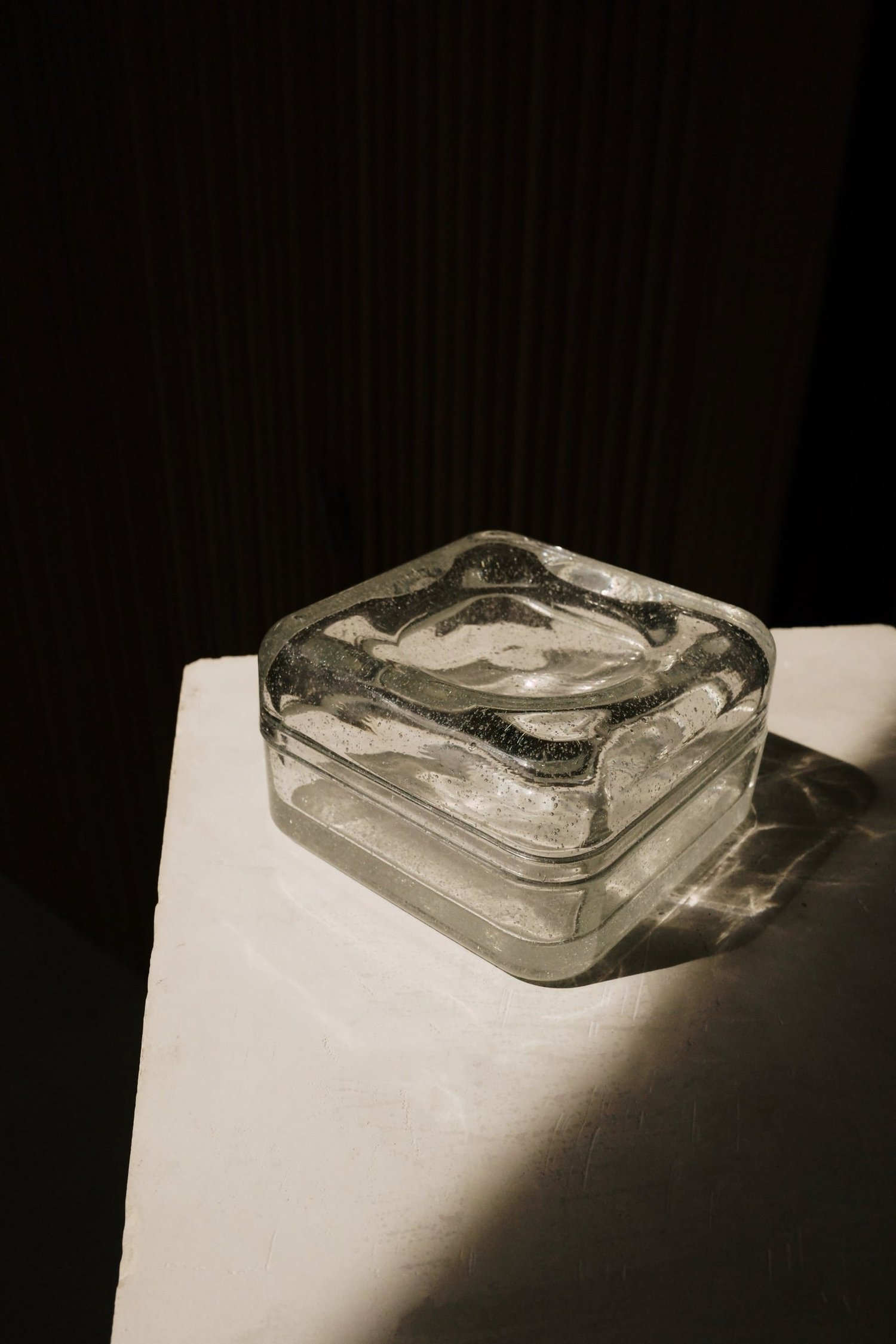
There is a shift that happens here—from something expansive and geological to something held in the hand. Rather than simplifying the form, Mozo focused on retaining its logic: smooth transitions, sinuous curves, a sense of pressure applied over time. The result is a container that feels less designed than formed—its surface shaped by forces rather than intention.
Glass became the natural medium. “It transitions from liquid to solid,” she says. “That softness, that ability to melt and settle—it creates a more fluid form.”
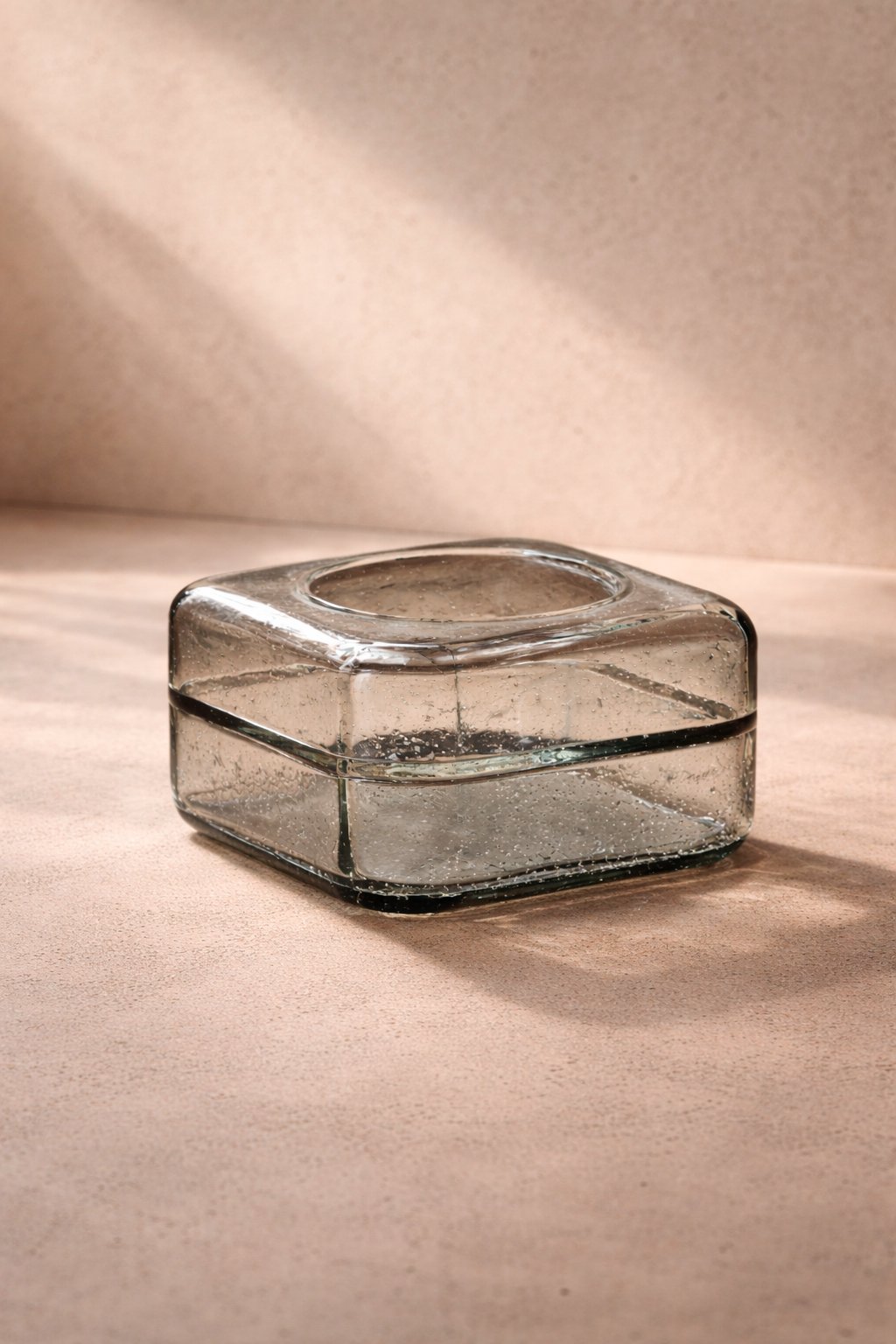
The material allows the object to hold onto that sense of movement. Even in its final state, it carries a memory of change. The piece is, at its most basic level, a container. A place to hold small, personal items—jewelry, objects, fragments of everyday life. But the addition of a lid shifts its role. It becomes something closer to a vitrine. A boundary that doesn’t conceal, but frames. Transparency allows the contents to remain visible, turning what is held into part of the object itself.
“I wanted it to feel like a small window,” Mozo explains. “Something that contains, but still lets you see inside. The lid acts as a boundary, yet its concave form also offers a moment of display.”Gabriella Mozo
A material-led practice shaped through process
Across her practice, Mozo returns to the idea of understanding a material on its own terms. She often begins with direct experimentation—testing, breaking, observing. Allowing unexpected results to guide the process rather than correcting them.
“Unpredictability is a source of inspiration for me. When I don’t know exactly how something will unfold, it forces me to stay open and uncover ideas that feel more authentic and original.”
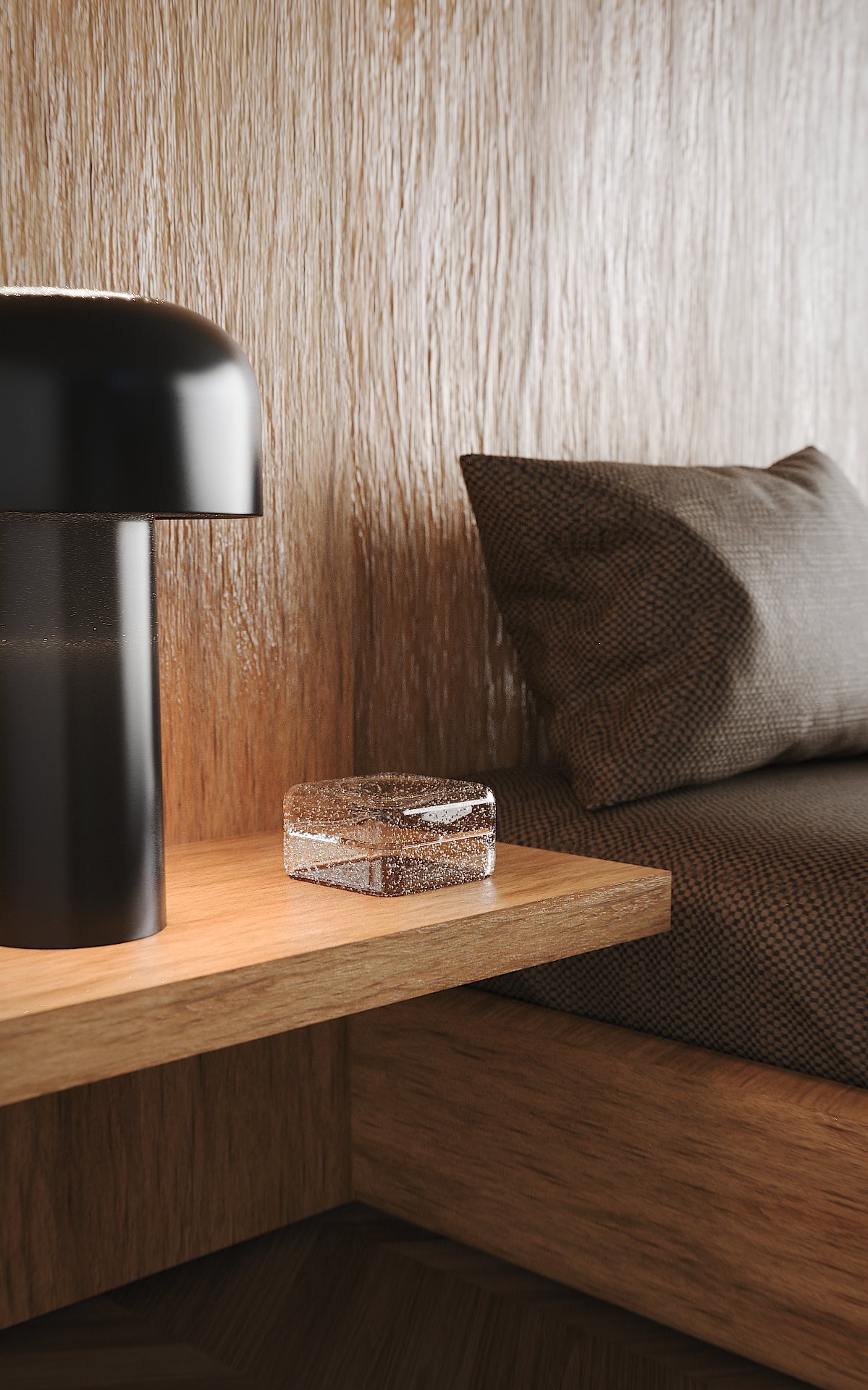
In a domestic setting, Erosion Container moves between roles. It functions as a vessel, but also as a standalone object—something closer to a fragment of landscape brought indoors. When empty, it still holds presence. Mozo is drawn to this duality. Objects that don’t rely on use to justify themselves, but can shift between function and something more atmospheric.
“I like the idea that it can stand on its own,” she says. “Almost like a small landscape in the home.”Gabriella Mozo
${contentData.items}
